- Home
- Products
- About Us
- Quality
- Application
- Services & Support
- Blogs
- Contact


| Quantity: | |
|---|---|


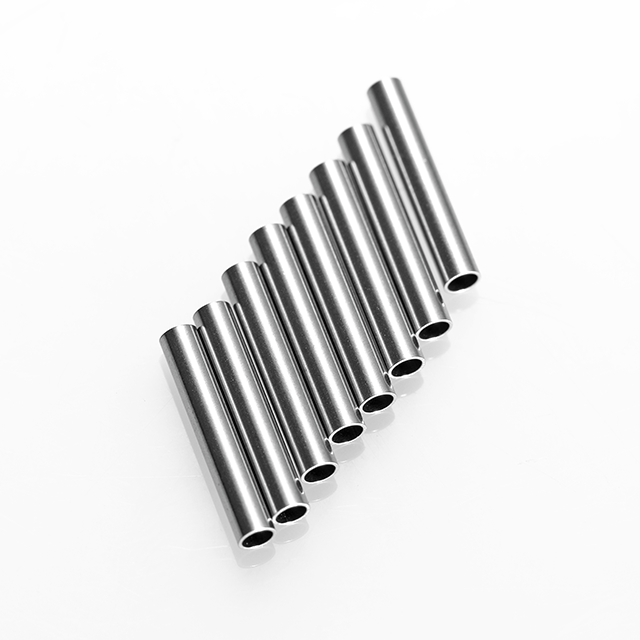
316L Cryogenic Tubing is an austenitic stainless steel tube engineered for ultra-low temperature and cryogenic service applications. Manufactured from ASTM A269, ASTM A213, or ASTM A312 TP316L stainless steel, this tubing delivers toughness, corrosion resistance, weldability, and structural stability at temperatures as low as -269°C (-452°F).
With its reduced carbon content, 316L stainless steel provides resistance to intergranular corrosion following welding procedures. This material characteristic makes the tubing suitable for liquid hydrogen (LH₂), liquid nitrogen (LN₂), liquid oxygen (LOX), liquid natural gas (LNG), helium refrigeration systems, cryogenic heat exchangers, hydrogen fueling stations, and aerospace installations. Precision cryogenic tubing is produced with strict dimensional tolerances and available in bright annealed (BA), pickled, or electropolished (EP) surface finishes, ensuring cleanliness for critical cryogenic systems.
 |  |  |
Standard Product Specifications | |
|---|---|
Parameter | Range |
Material Grade | ASTM A269 TP316L / ASTM A213 TP316L / ASTM A312 TP316L |
UNS Number | S31603 |
Outside Diameter (OD) | 1.0 mm – 60.3 mm |
Wall Thickness (WT) | 0.15 mm – 5.0 mm |
Length | Up to 12,000 mm |
Manufacturing Process | Seamless / Welded & Drawn |
Surface Finish | BA, EP, Pickled, Polished |
Tube Ends | Plain End, Deburred, Orbital Welding End |
Temperature Range | -269°C to +550°C |
Standards | ASTM A269, ASTM A213, ASTM A312, ASME SA269, SA213 |
Certification | EN10204 3.1 / PED 2014/68/EU |
Standard instrumentation tubing sizes include 1/8", 1/4", 3/8", 1/2", 3/4", and 1". Custom dimensions are available according to customer drawings and project specifications.
Precision Cryogenic Tubing Dimensions | |
|---|---|
OD (mm) | WT (mm) |
3.18 | 0.50 |
4.76 | 0.50 |
6.35 | 0.89 |
8.00 | 1.00 |
9.52 | 0.89 |
10.00 | 1.00 |
12.70 | 1.24 |
15.88 | 1.65 |
19.05 | 1.65 |
25.40 | 2.11 |
38.10 | 2.00 |
50.80 | 2.77 |
To ensure compliance with international cryogenic standards, every production batch undergoes structured inspection procedures. Raw material verification includes mill test certificate review, heat number traceability, and positive material identification (PMI).
Dimensional inspection covers outside diameter measurement, wall thickness measurement, length verification, straightness inspection, and ovality check. Mechanical testing includes tensile test, yield strength test, elongation test, flattening test, flaring test, and hardness test. Non-destructive testing comprises eddy current test (100% coverage), ultrasonic test (UT), and liquid penetrant test (PT) for welded assemblies. Surface inspection includes surface roughness test, visual inspection, internal cleanliness inspection, and end preparation inspection. Special cryogenic testing including cryogenic impact test and hydrostatic pressure test is available upon request. Documentation includes EN10204 3.1 certificate, PMI report, dimensional inspection report, NDT report, and pressure test report.
 |  |  |
 |  |  |
 |  |  |
316L cryogenic tubing serves liquid hydrogen systems including hydrogen refueling stations, hydrogen storage tanks, hydrogen liquefaction plants, and hydrogen transportation systems. Within the LNG industry, applications include LNG heat exchangers, LNG vaporizers, LNG regasification terminals, and floating LNG platforms.
Industrial gas applications cover liquid nitrogen (LN₂) systems, liquid oxygen (LOX) systems, and liquid argon systems. Cryogenic equipment applications include cryocoolers, cryopumps, helium refrigeration systems, and cryogenic compressors. Semiconductor industry installations include high purity gas distribution systems, ultra-high vacuum equipment, and cleanroom gas supply lines. Aerospace and defense applications cover rocket fuel systems, satellite cooling systems, and space simulation chambers. Medical industry uses include MRI cooling systems and medical gas storage systems.
316L contains lower carbon content, which reduces the risk of intergranular corrosion after welding operations. This property makes 316L particularly suitable for fabricated cryogenic systems.
Each shipment includes EN10204 3.1 material certification, PMI test report, dimensional inspection report, and applicable NDT test reports. PED 2014/68/EU compliance documentation is also available.
Yes, custom outside diameters, wall thicknesses, and lengths are manufactured according to customer drawings and specific project requirements.
Standard surface finishes include bright annealed (BA), electropolished (EP), pickled, and polished. Surface selection depends on application cleanliness requirements.
Yes, tubing ends are prepared for orbital welding with deburred edges and controlled dimensional tolerances to ensure consistent weld quality.