
Views: 0 Author: Site Editor Publish Time: 2026-07-03 Origin: Site


Precision capillary tubes are tiny, thin tubes with a small inside space. People use them to move liquids very carefully in many places. Their design uses exact shaping and a smooth inside. This helps you control how much liquid the tube can hold. These tubes are very important in medical tests, lab science, and factories.
Metric | Value (2025) | Projected Value (2033) | CAGR (%) |
|---|---|---|---|
Global capillary blood collection devices market size | USD 2.09 billion | USD 4.14 billion | 9.51 |
Plastic tubes market share | 54.92% | N/A | N/A |
This table shows these tubes are very useful in today’s science and technology.
Precision capillary tubes help move liquids accurately in many places. They are used in medical, laboratory, and industrial jobs. These tubes are made from strong materials like stainless steel. Stainless steel does not rust or corrode. This makes the tubes last longer and work well. As technology gets better, more people will need these tubes. They will help make new things in science and industry.
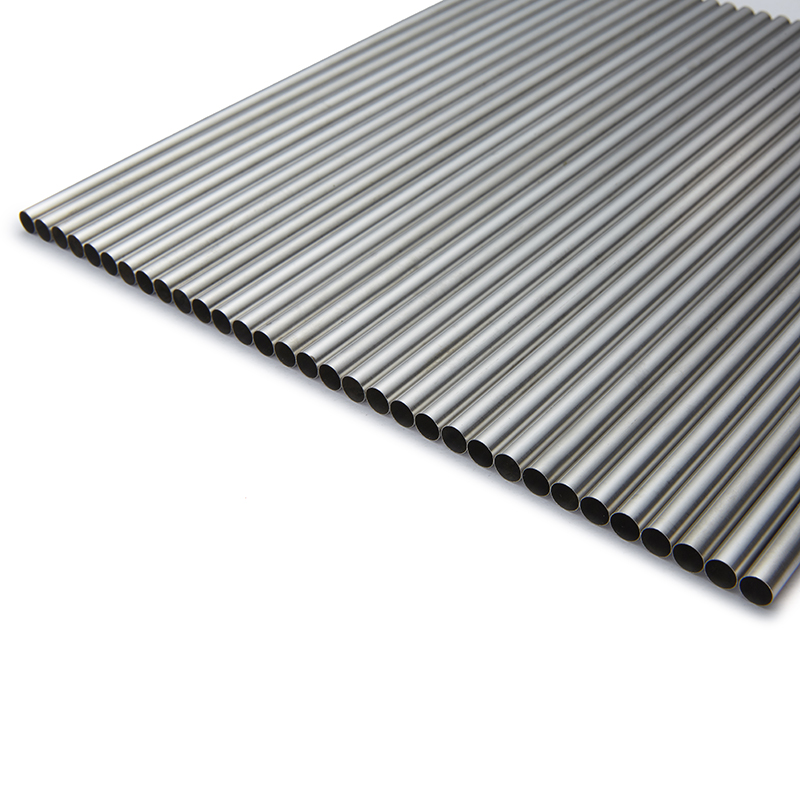
Precision capillary tubes are very small and shaped exactly right. Their inside is tiny, so you can control liquid flow well. These tubes are used in medical tools, lab gear, and machines.
You can pick from different materials for these tubes. Each one has its own good points:
Stainless steel does not rust or corrode easily. It works well where there are strong chemicals or water. This means the tube lasts longer and needs less fixing.
Stainless steel is also very strong. You can use it when there is high pressure or heat, like in planes or medicine.
The tubes have no seams, so the inside is smooth. This helps liquids move without much friction or swirling. It is helpful in medical tools and other careful uses.
Many companies, such as Huashang Steel, make many types of stainless steel micro tubes. These tubes are used in oil, gas, power plants, and other big industries.
You may wonder how these tubes are made so exact. The answer is careful design, strict rules, and special steps.
Makers control the inside size very closely. This gives you the same results each time.
They follow rules like ASTM, DIN, and ISO. These rules make sure the tubes are just right.
The size and wall thickness can be controlled within ±0.015 mm. This is important when even a small change matters.
The inside is very smooth. The roughness is usually less than 0.50 µ. This helps liquids move and stops clogs.
To make these tubes so exact, makers use these steps:
Pick and prepare the best stainless steel for strength and no rust.
Pull the metal through a die at room temperature. This step controls the size and wall thickness.
Heat the tubes to make them better and easier to use.
Polish the tubes to make them shiny and stop rust.
Test each tube for size, strength, and smoothness. Special tests find problems early.
Tip: High-precision capillary tubes are needed in cooling, medical tools, and science. You can count on these tubes for good and correct results.
Makers use strong checks to make sure every tube is the best. Here is a table with some checks and why they help:
Quality Item | Recommended Check | Buyer Benefit |
|---|---|---|
Material Certificate | Check grade, heat number, and what it is made of | Makes it easy to track and lowers wrong material risk |
Dimensional Report | Measure outside, inside, wall, and length | Helps put together and keeps things working right |
Microscope Inspection | Look for burrs, cracks, bent parts, and bad spots | Stops clogs, leaks, and broken parts |
Cleanliness Review | Check cleaning steps and package condition | Needed for fluid paths and medical tools |
Process Traceability | Record batch, drawing, checks, and packaging info | Helps keep supply steady and check quality later |
With these steps, you can trust precision capillary tubes for jobs that need to be exact and steady.
In labs, capillary tubes are used for testing and research. They help handle tiny samples with great accuracy. You use them for spotting, moving, and dispensing small amounts of liquid. In Thin Layer Chromatography, you use spotting tubes to put tiny drops on plates. This gives clear and reliable results.
Capillary tubes are important in chemical analysis and chromatography. You pick them because they have a small inner diameter. This controls flow and pressure. In UHPLC, you use tubes with smaller diameters. This reduces dispersion and gives sharper results. The right size of tubing makes a big difference in testing.
You use capillary tubes for blood sampling, like checking glucose and hemoglobin. Microhematocrit centrifugation uses these tubes to measure hematocrit levels. The design lets you handle tiny liquid volumes. This is key for accurate lab work.
Note: Special capillary tubes, like Ultra Thin Wall AMS Seamless Tube, are used for advanced lab and research. Companies like Huashang Steel supply these tubes to labs and industries needing high precision.
Capillary tubing is used in refrigeration systems to control temperature and pressure. These tubes act as throttling elements. They manage the flow of refrigerant. When high-pressure liquid goes through the tube, pressure drops. The refrigerant evaporates at a low temperature. This cools the unit and helps heat exchange.
Capillary tubing is simple, cheap, and reliable. You do not need complex valves or controls. The fixed size makes sure the right amount flows through. This matches the compressor’s output. It helps keep the system running smoothly.
Capillary tubing is used in temperature measurement devices. The tubes send pressure accurately and without loss. This is important for reliable readings. You can trust these tubes for stable, long-distance pressure transmission. They protect sensitive parts from high heat and harsh chemicals.
Tip: For heat exchangers and coil heaters, you pick capillary tubing because it improves heat exchange. The design and material help you manage temperature with precision.
In oil and gas, precision capillary tubes are used for important tasks. These tubes handle high pressure and resist corrosion. You use them for chemical agent injection, hydraulic control, and real-time monitoring.
Function | Description |
|---|---|
Chemical agent injection | You deliver inhibitors to protect tubing and equipment. |
Hydraulic control | Tubes are used for remote control of safety valves. |
Real-time monitoring | Tubes protect sensors for monitoring temperature, pressure, and sound. |
You pick capillary tubes in oil and gas because they can handle tough conditions. The tubes protect sensitive equipment from heat and chemicals. You get high accuracy and long-term stability, even when things change.
Note: Aerospace Capillary Stainless Steel Tube and other advanced types from Huashang Steel are used in oil, gas, petrochemical, and power generation. These tubes meet strict standards and help you move fluids reliably in tough jobs.
There are many materials for capillary tubes. Each one has its own good points. Stainless steel tubes are strong and do not rust. Copper tubes move heat very well. Inconel and Hastelloy tubes work in hot and harsh places. Nitinol tubes can bend and return to their shape. This is helpful in medical tools. Fused silica tubes have a smooth inside and do not react much. This makes them good for careful flow control. Glass capillary tubes are easy to clean and do not get damaged by chemicals. They stay clear and keep their shape after many uses. Plastic tubes are light and can bend easily. You use them when you want a cheap or special design.
Tip: Pick the material that fits your needs best. Stainless steel micro tubes are great for hard jobs in oil and gas. Fused silica tubes are good for labs that need clean and careful flow.
Capillary tubes come in many sizes. Some tubes are as small as 0.30 mm wide. Others can be as big as 8.00 mm. The wall can be thin, like 0.06 mm, or thick, up to 1.65 mm. Tubes can be short or long, from 1.0 mm to 6.0 mm or more. Copper tubes can be made in special sizes for cooling and moving liquids. Small tubes slow down the flow and help you control liquids better. Big tubes let more liquid move but can lower the pressure. You need to pick the right size for your job. This helps stop problems like too much or too little flow.
Material | Diameter Range (mm) | Wall Thickness (mm) | Length Range (mm) | Applications |
|---|---|---|---|---|
Stainless Steel 304 | 0.30 to 8.00 | 0.06 to 1.65 | 1.0 to 6.0 | Medical, Chromatography, Industry |
Copper | Customizable | Customizable | Customizable | Refrigeration, Fluid Control |
Note: Seamless capillary tubes are good for high pressure. Welded tubes work for low pressure and longer tubes.
Custom capillary tubes are used in engineering, medical tools, chromatography, planes, and energy work. Huashang Steel makes many kinds of these tubes for different jobs. You can trust their tubes to work well and last long.
Precision capillary tubes are used in many fields. You see them in engineering, medicine, chemistry, and energy. They are made from strong materials like stainless steel or nickel titanium. This makes them good for important tasks.
As technology gets better, capillary tubes will be used more. You will find them in smart devices and systems that save energy. These small tubes help change science and industry for the future.
Precision capillary tubes are much thinner inside. Their walls are very smooth. This lets you control fluids very well. You get the same results each time. Regular tubes are not as exact.
You use stainless steel micro tubes in medical tools and lab machines. They are also used in factories. These tubes do not rust and can handle strong pressure. They work well in hard places.
Yes, you can pick the size, material, and features you need. Companies like Huashang Steel make special tubes for medicine, planes, and factories.
Oil and gas jobs need tubes that can take strong pressure. They also need tubes that do not rust. Precision capillary seamless tubes work well and keep equipment safe.


