
- Home
- Products
- About Us
- Quality
- Application
- Services & Support
- Blogs
- Contact
Views: 0 Author: Site Editor Publish Time: 2026-04-27 Origin: Site


Have you ever wondered what makes some pipes stronger or more reliable?
Understanding the difference between welded and seamless pipes is crucial for many industries.
Seamless pipes are often preferred for high-pressure, critical applications.
In this article, you’ll learn the key differences, advantages, and uses of seamless pipes.
We’ll also explore how Huashang Steel ensures top quality in their manufacturing processes.
Stay tuned to discover which pipe type is right for your project!
Welded pipes are made by shaping steel sheets or strips into a tube and then joining the edges. This process is straightforward and cost-effective, which makes welded pipes popular for many industries. They’re often used in construction, water systems, and even automotive parts. The key is how the edges are fused together; this weld creates a seam that runs along the length of the pipe.
Welding methods vary depending on the application, size, and desired strength. The most common types are ERW (Electric Resistance Welding) and LSAW (Longitudinal Submerged Arc Welding). ERW pipes are produced by passing a high-frequency electric current through the edges of a steel strip, melting and fusing them together. This method is fast and produces a smooth, uniform weld, ideal for smaller or medium-sized pipes.
On the other hand, LSAW involves bending steel plates into a U-shape and then welding along the seam. It’s used for larger diameter pipes, often in long-distance pipeline projects. Huashang Steel, a well-known manufacturer, uses advanced automatic welding lines to ensure their welded and seamless pipe meet strict quality standards. This automation guarantees stable weld quality and consistent performance, especially important for critical applications.
Seamless pipes are quite different. They’re made from a solid billet of steel, heated to a high temperature and then pierced through the center. This process creates a hollow tube without any welds, giving the pipe a uniform structure from end to end. It’s like starting with a solid cylinder and stretching it into a pipe shape.
The manufacturing process begins with a billet, which is heated and then pierced using a mandrel. Once the hollow shape is formed, it’s rolled and stretched through various processes—hot or cold—to meet specific dimensions. The result is a pipe with consistent wall thickness and mechanical properties, which are crucial for high-pressure, high-temperature environments.
Huashang Steel’s seamless pipes are produced with precision, ensuring they’re suitable for critical environments like oil & gas, power plants, and aerospace. These pipes are known for their high-pressure resistance because their uniform structure can withstand extreme conditions. Their manufacturing process supports tight tolerances, often down to 0.01mm, making them reliable for demanding applications.
Aspect | Welded Pipe | Seamless Pipe |
Manufacturing | Formed from steel sheet, welded along the seam | Made from solid billets, no welds |
Strength | Good for medium to low pressure | Higher pressure resistance, uniform strength |
Cost | Usually cheaper | More expensive due to complex process |
Size Range | Wide, especially large diameters | Limited, mostly smaller sizes |
Use Cases | Construction, water systems | Critical environments, high-pressure systems |
Both types serve their purposes, but knowing how they’re made helps in choosing the right one. Huashang Steel’s expertise ensures their welded and seamless pipe are manufactured to meet industry standards, whether for simple plumbing or high-stakes projects.
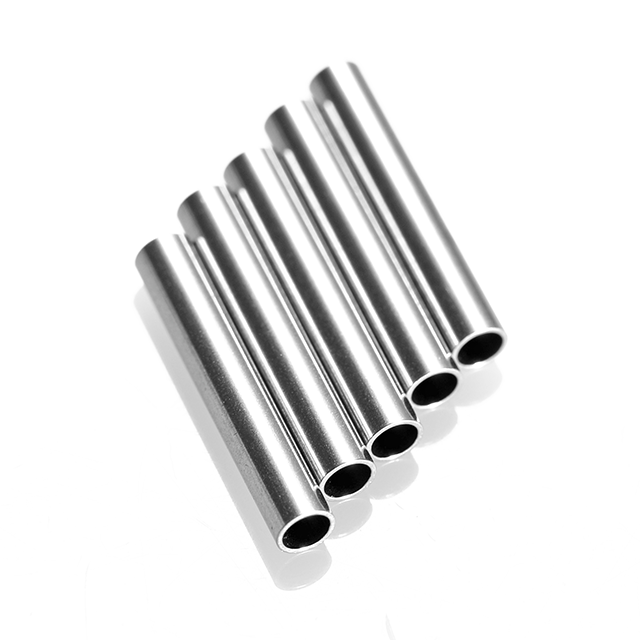
When you look at how welded and seamless pipe are produced, the differences are clear.
Welded pipes start with steel sheets or strips that are shaped into a tube, then welded along the seam.
This process is simpler and faster, which keeps costs lower. The welding can be done using various methods, such as ERW (Electric Resistance Welding) for smaller pipes or LSAW (Longitudinal Submerged Arc Welding) for larger diameters.
Huashang Steel, for example, uses advanced automatic welding lines to ensure their welded pipes have stable weld quality and high consistency. This automation reduces variability, making the pipes reliable for many applications.
Seamless pipes, on the other hand, are made from solid billets. The process involves heating the billet and piercing it through the center with a mandrel. This creates a hollow tube without any welds. The tube is then rolled or drawn through multiple stages—hot rolling or cold drawing—to meet precise dimensions.
This manufacturing method is more complex and labor-intensive, which naturally leads to higher costs. But it results in a pipe with a uniform structure, which is often a key factor for high-pressure environments.
The main difference here lies in how each pipe type handles stress.
Seamless pipes are generally stronger when it comes to pressure resistance. They have a uniform, continuous structure without any weak points, making them ideal for high-pressure applications. Their consistent wall thickness and lack of welds mean they can withstand more stress and are less prone to failure under extreme conditions.Welded pipes, while still strong, have a weld seam that can be a weak point. The strength of this seam depends on the welding quality and process used. For most standard uses, especially in low to medium pressure settings, welded pipes are sufficient.
For critical applications like oil & gas or power plants, the choice between welded and seamless pipe becomes crucial.
Seamless pipes excel here because they meet international standards like ASTM, API, and EN, which specify their suitability for demanding environments. Huashang Steel’s seamless pipes are designed with high-pressure resistance in mind, making them perfect for high-temperature or corrosive environments.Welded pipes can also perform well, especially when produced with advanced welding techniques and strict quality control. However, they are more often used where the pressure isn't as extreme, or the environment is less corrosive.
Weld seams tend to be more susceptible to corrosion, especially in harsh environments with high temperatures or corrosive substances. Over time, this can lead to leaks or failure.
Seamless pipes, with their continuous structure, generally have better corrosion resistance because they lack welds that might become weak points.Huashang Steel’s seamless pipes are manufactured to meet rigorous standards, ensuring excellent resistance to corrosion, even in challenging conditions.
In many industries, precision matters.
Seamless pipes are produced with tight tolerances, often down to 0.01mm, thanks to their controlled manufacturing process. This makes them suitable for applications requiring exact dimensions.Welded pipes, depending on the method, can vary more in size and wall thickness. While they are available in larger diameters and lengths, their dimensional accuracy can be slightly less consistent.
Cost is a big factor when choosing between welded and seamless pipe .
Welded pipes are generally more affordable, especially for larger sizes and longer lengths. They are produced faster and in larger quantities, making them more readily available.Seamless pipes, due to their complex manufacturing process, tend to be more expensive. But Huashang Steel’s extensive inventory and efficient production methods support quick delivery, even for custom sizes.
Aspect | Welded Pipe | Seamless Pipe |
Cost | Lower | Higher |
Size Range | Wide, large diameters | Limited, smaller sizes |
Pressure Resistance | Good, but depends on quality | Excellent, suited for high-pressure |
Corrosion Resistance | Slightly less | Better in harsh environments |
Manufacturing Complexity | Simpler, faster | More complex, slower |
Understanding these differences helps in selecting the right pipe for your project, whether it’s for a low-pressure water system or a high-pressure oil pipeline.
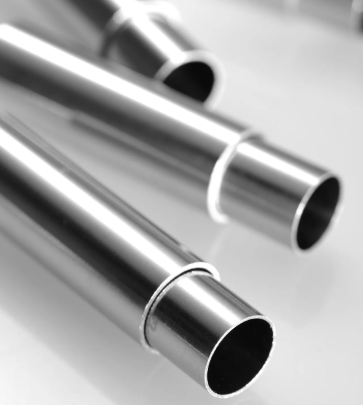
Seamless pipes are the go-to choice when it comes to high-pressure and high-temperature environments. They’re designed to handle extreme conditions that welded and seamless pipe often can’t. Industries like oil & gas, power generation, chemical processing, and aerospace rely heavily on these pipes for their critical systems.
For example, Huashang Steel’s seamless pipes are ideal for applications such as boilers, heat exchangers, and even nuclear power plants. These pipes are manufactured to meet international standards like ASTM, API, and EN, ensuring they perform reliably under demanding conditions. Their high-pressure resistance and uniform mechanical properties make them essential in environments where safety and durability are non-negotiable.
In high-stakes industries, the integrity of the piping system can be the difference between safe operation and disaster. Seamless pipes' ability to withstand high temperatures and corrosive substances without failure makes them indispensable for critical systems.
Welded pipes shine in structural applications and situations where the pressure isn’t as extreme. They’re widely used for low to medium pressure fluid transport, making them perfect for everyday needs like construction and infrastructure projects.
You’ll find welded and seamless pipe in water lines, scaffolding, and general piping systems. Their ease of manufacturing and cost-effectiveness allow them to be produced in larger sizes and lengths, which is a big advantage.
In fact, welded pipes are often the backbone of building frameworks, water supply networks, and even fencing. They’re durable enough for these purposes, provided the pressure and environmental factors stay within moderate limits.
Application Area | Pipe Type | Key Features | Common Uses |
Critical high-pressure systems | Seamless Pipe | High-pressure resistance, uniform structure | Boilers, heat exchangers, nuclear reactors |
High-temperature environments | Seamless Pipe | Excellent thermal stability | Power plants, chemical reactors |
Structural and low-pressure systems | Welded Pipe | Cost-effective, large sizes | Water lines, scaffolding, general piping |
Low to medium pressure fluid transport | Welded Pipe | Easy to produce, versatile | Construction, water supply, fencing |
This table highlights how each pipe type fits into different applications. The choice often depends on the environment’s pressure, temperature, and safety requirements. Huashang Steel’s expertise ensures their welded and seamless pipe meet industry standards, giving customers confidence in their performance.
Whether it’s a high-pressure oil pipeline or a simple water line, understanding where each pipe excels helps in making smarter decisions. Sometimes, the difference between a safe, long-lasting system and one prone to failure comes down to choosing the right pipe for the job.
Welded and seamless pipe differ mainly in manufacturing, strength, and applications.
Seamless pipes excel in high-pressure, high-temperature environments, ideal for critical systems.
Welded pipes are cost-effective and suitable for structural and low-pressure uses.
Choosing the right pipe depends on your specific needs and standards.
Working with reputable suppliers like Huashang Steel ensures quality, reliability, and safety.
A: Generally, welded pipes are suitable for low to medium pressure, but high-pressure applications favor seamless pipes for their stronger, uniform structure.
A: Yes, seamless pipes usually cost more due to complex manufacturing processes, but they offer higher performance in demanding environments.
A: Oil & gas, power generation, chemical industries, and aerospace mainly rely on seamless pipes for critical systems.
A: Weld seams can be weak points, especially in corrosive or high-stress environments, reducing overall durability.
A: Standards like ASTM, API, and EN are essential for ensuring pipes meet safety and performance requirements.


