
- Home
- Products
- About Us
- Quality
- Application
- Services & Support
- Blogs
- Contact
Views: 0 Author: Site Editor Publish Time: 2026-01-16 Origin: Site


Procuring industrial piping materials involves navigating a landscape where quality variance can be invisible to the naked eye but catastrophic in application. The cost of installing substandard tubing extends far beyond the initial purchase price, manifesting later as system leakage, expensive downtime, or safety hazards in high-pressure environments. For engineers and procurement managers, relying solely on price or surface appearance is a gamble that critical infrastructure cannot afford to take.
While Mill Test Certificates (MTCs) are industry standard, a significant verification gap often exists between the paperwork and the physical product delivered to your site. Documents can be forged, or batches can be mixed, making physical verification necessary to ensure the delivered product matches the specifications on the page. You need a robust inspection strategy that goes beyond trusting a stamp.
This guide provides a multi-layered inspection framework designed for decision-makers. From immediate visual cues and field chemical tests to lab-grade validation, we detail how to identify authentic, High-Quality Stainless Steel Seamless Tube products. You will learn to detect manufacturing defects, verify material grades, and assess structural integrity to ensure long-term operational reliability.
Visual Audit: True seamless tubes lack weld seams; look for consistent wall thickness and absence of "internal ribs."
The Magnet Trap: Magnetic testing is unreliable for 304/316 grades due to cold-working induced magnetism; rely on chemical spot tests instead.
Critical Defects: Watch for "oval" cross-sections and "ears" (folding) at the cut ends, indicating poor rolling processes.
Standards Compliance: Verify ISO/ASTM markings specifically for high-pressure vs. heat-exchanger applications (A312 vs. A213).
Before employing advanced chemical analysis, a thorough visual and physical inspection serves as the most effective filter for low-quality stock. These non-destructive checks can be performed immediately upon delivery. They reveal tell-tale signs of inferior manufacturing processes that affect the tube's dimensional accuracy and sealing capabilities.
In precision applications, the geometry of the tube is just as critical as the material itself. A common defect found in lower-tier manufacturing is ovality, where the cross-section is not a perfect circle.
The Defect: This issue typically arises when manufacturers attempt to reduce material usage. They may over-compress the steel before the finishing roll, leading to significant dimensional variance. While the tube may appear round at a glance, instruments tell a different story.
The Risk: Ovality compromises the integrity of connections. When you use a precision stainless steel seamless tube with ovality issues, standard fittings may not seal correctly. This misalignment creates weak points susceptible to leakage under pressure or vibration.
Detection: Do not rely on visual estimation. Use digital calipers to measure the Outer Diameter (OD) at multiple angles around the same cross-section. If you find consistent variance—where the diameter at 0 degrees differs significantly from the diameter at 90 degrees—it indicates poor rolling temperature control or equipment misalignment.
The condition of the tube ends and surface finish provides forensic evidence of the raw material quality and the machinery used to shape it.
"Flesh Loss" and "Large Ears": Inspect the cut ends closely. In inferior processing, you may see unevenness, described as "flesh loss" (bumpy, non-uniform cuts) or "ears" (folding metal at the edges). These defects suggest the manufacturer utilized worn-out equipment or inferior raw billets. Often, these billets are made from recycled "earth bricks" or low-grade ingots rather than refined steel, leading to poor ductility during cutting.
Crusting and Scabs: Examine the outer surface for scarring, scabs, or heavy pitting. These imperfections are often caused by impurities in the steel itself or the material sticking to the rollers during the hot rolling process. A high-quality tube should have a smooth, defect-free surface finish.
One of the most deceptive practices in the market is disguising welded pipe as seamless. Some manufacturers process welded pipes to remove the internal weld bead, making them visually similar to seamless stock.
Seamless vs. Deceptive Welded: A true Stainless Steel Seamless Tube is extruded from a solid billet, meaning it has no longitudinal seam whatsoever. Welded tubes, even when treated, often retain structural differences along the weld line.
Method: If visual inspection is inconclusive, use the touch test. Run a finger or a tactile probe along the internal length of the tube. Seamless tubing will be uniformly smooth. A disguised welded tube, despite bead removal, often retains a subtle longitudinal ridge, a slight change in texture, or a variation in wall thickness that can be felt even if it cannot be easily seen.
The care taken in packaging often reflects the manufacturer's overall quality control standards. Scratches or gouges incurred during transit are not merely cosmetic issues; for high purity stainless steel seamless tube applications, deep scratches can become initiation sites for crevice corrosion.
Assessment: Verify that the provider uses protective caps for the ends, sturdy wooden crates, or bundled wrapping to prevent metal-on-metal contact. Proper packaging ensures that the surface finish you paid for is the surface finish you receive.
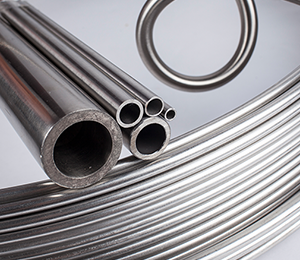
Once physical dimensions are verified, the next step is confirming the material composition. You do not always need a full laboratory to distinguish between carbon steel, 304, and 316 grades. Several field tests can provide immediate answers.
There is a persistent myth in the industry that "stainless steel is never magnetic." Relying on this rule blindly can lead to rejecting perfectly good material.
The Reality: While austenitic stainless steels (like 304 and 316) are non-magnetic in their annealed state, the cold working process—such as bending, drawing, or rolling—can induce slight magnetism. This occurs because the physical stress causes a partial transformation of the microstructure into martensite.
Decision Logic:
Strong Magnetism: This usually indicates 400-series stainless (ferritic/martensitic) or carbon steel. If you ordered 304, reject this.
Weak Magnetism: This is often acceptable and indicates the tube has undergone cold working.
Zero Magnetism: This is ideal but not the sole indicator of quality.
Reagent testing is a fast, destructive method to identify base metals. These tests involve placing a drop of acid on the metal surface and observing the reaction.
Copper Sulfate Test: This is the quickest way to separate carbon or manganese steel from stainless variants.
Procedure: Remove the oxide layer on a small spot, add a drop of water, and rub it with copper sulfate.
Result: Carbon steel will plate with a copper color almost immediately due to a displacement reaction. Stainless steel will show no reaction. This effectively filters out non-stainless counterfeits.
Nitric Acid Test: This test differentiates high-nickel stainless from lower alloys. Stainless steel is inherently resistant to nitric acid. Lower alloy steels or carbon steels will corrode rapidly and turn brown or black where the acid is applied.
Distinguishing between 304 and 316 grades is critical because 316 contains Molybdenum, which offers superior corrosion resistance in chloride environments. Visually, they look identical.
| Test Method | 304 Stainless Steel | 316 Stainless Steel |
|---|---|---|
| Sulfuric Acid Immersion | Reacts vigorously; produces gas bubbles and turns black quickly. | Reacts very slowly due to Molybdenum content; minimal bubbling. |
| Spot Test Reagent (Ni/Mo specific) | No color change (or distinct non-molybdenum color). | Turns specific color (often red/pink depending on kit) confirming Molybdenum. |
Scent Identifiers: While rare, experienced inspectors sometimes use scent during acid reactions to identify specific free-machining grades. For instance, high-sulfur grades like 416 may release a "rotten egg" smell (hydrogen sulfide) when reacting with acid, while Selenium-bearing grades like 303 can emit a faint garlic-like odor. These are nuanced tactics for specific identification challenges.
Visual and chemical checks confirm what the tube is, but structural integrity checks confirm what the tube can do. You must match the physical capabilities of the product to your industrial application.
The primary reason engineers specify seamless tubing is for its superior pressure-handling capabilities and uniformity. Unlike welded tubes, which have a seam that can act as a stress concentrator or a site for preferential corrosion, seamless tubes are homogenous.
Pressure Ratings: Generally, seamless tubes can handle approximately 20% higher working pressure than welded equivalents of the same dimension and grade. This safety margin is non-negotiable for high pressure stainless steel seamless tube applications found in hydraulic systems, boilers, and high-stress fluid transport.
The mechanical properties of stainless steel are heavily dependent on proper heat treatment, specifically solution annealing.
The "Solution Annealing" Check: This process involves heating the steel to a high temperature and cooling it rapidly. This dissolves carbides that may have precipitated at grain boundaries. If a manufacturer skips this step to save energy costs, the tube becomes prone to intergranular corrosion, which can lead to catastrophic failure.
Visual Cue: You can often assess annealing quality by the surface luster. Properly annealed tubes typically possess a uniform, bright metallic luster. If the surface appears dull, dark red, or has a "cast-iron" color, it indicates that the rolling temperatures were uncontrolled or the annealing process was insufficient.
For applications involving furnaces or heat exchangers, selecting the correct sub-grade is vital. Standard 304 or 316 might not suffice for extreme temperatures.
Grade Selection: When sourcing heat resistant stainless steel seamless tube, you often need "H-grades" (like 304H or 316H), which have higher carbon content for better creep strength at high temperatures. Verifying grain size and carbon content requires a detailed review of the Mill Test Certificate (MTC), as these properties are not visible to the naked eye.
For critical infrastructure projects, field tests are a screening tool, not a final validation. Professional auditing involves a deep dive into the documentation and third-party validation standards.
Every legitimate tube should carry continuous stenciling that provides traceability. This marking is your link between the physical object and the paperwork.
ISO vs. ASTM: Ensure the markings match the specification required for your project.
ASTM A312: Standard specification for seamless, welded, and heavily cold worked austenitic stainless steel pipes (general corrosive/high-temp).
ASTM A213: Standard specification for seamless ferritic and austenitic alloy-steel boiler, superheater, and heat-exchanger tubes (precision applications).
ISO Standards: Verify ISO stainless steel seamless tube equivalents if your project adheres to international rather than American standards.
Traceability: A high-quality tube must have a heat number stamped directly on it. This number must correlate exactly to the Mill Test Certificate provided by the supplier. If the numbers do not match, the certificate is worthless.
When reviewing the MTC, look for specific test results that validate the manufacturing method.
Flaring Test (Seamless Specific): This test verifies the ductility of the steel and checks for internal defects. A cone is forced into the end of the tube to expand it. If the tube splits or reveals internal laminations, it fails. This is particularly important for seamless tubes that will undergo manipulation during installation.
Hydrostatic vs. NDT: Confirm the manufacturer performed either hydrostatic testing (pressure leak test) or Eddy Current testing (Non-Destructive Testing). These tests ensure that there are no hidden leaks or structural discontinuities that penetrate the wall.
For high-value orders, Positive Material Identification (PMI) is the gold standard for non-destructive verification. Using handheld X-Ray Fluorescence (XRF) analyzers, inspectors can determine the exact chemical composition of the alloy in seconds.
XRF Analyzers: While expensive, these devices provide the only definitive on-site proof of Nickel, Chromium, and Molybdenum percentages. If a supplier claims a tube is 316 but the XRF shows Molybdenum content below 2.0%, the material is non-compliant.
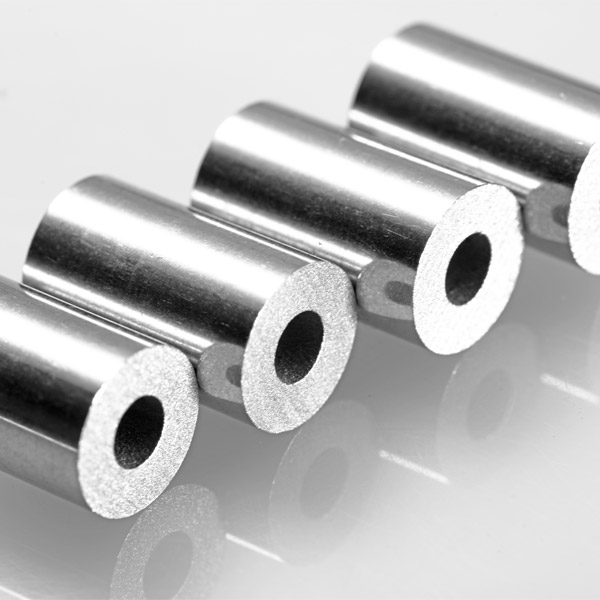
Ultimately, the quality of the tube is determined by the quality of the manufacturer. Evaluating a supplier involves looking at their process control and raw material sourcing to minimize the Total Cost of Ownership (TCO).
The supply chain begins with the billet. Does the Stainless Steel Seamless Tube manufacturer use refined furnace billets, which ensure high purity and consistent grain structure? Or do they use recycled heavy scrap or ingots, which carry a higher risk of impurities and inclusions? Asking for the source of their raw materials can reveal a lot about their quality positioning.
Understanding the difference between "Cold Drawing" and "Cold Rolling" is essential for precision needs. Cold drawing typically allows for tighter dimensional tolerances and better surface finishes compared to standard hot rolling. If your application requires high precision, ensure the manufacturer has cold drawing capabilities.
Do not just ask if they have QC; ask how they perform it. Request to see their internal "Pre-Shipment Inspection" (PSI) checklist. Reliable manufacturers verify ovality, straightness, and wall thickness uniformity using automated systems rather than manual spot checks. They should be willing to share these protocols with potential clients.
A true precision supplier does more than meet the minimum standard. They should guarantee tolerances that are tighter than standard ASTM requirements. This precision reduces machining costs during assembly and ensures a better fit in complex systems.
Identifying high-quality tubing is not about a single test; it is about a strategy of accumulation. Effective identification requires a balance of visual inspection to catch surface and shape defects, chemical verification to confirm grades, and rigorous documentation review to ensure standards compliance.
For critical infrastructure and high-pressure applications, the recommendation is clear: do not rely on price alone. A "cheaper" tube often carries hidden costs in the form of material impurities, lower pressure ratings, and significantly shorter lifecycles. These hidden costs invariably exceed the initial savings when a system failure occurs.
We encourage buyers to take an active role in quality assurance. Request samples for destructive testing before committing to bulk orders, and partner with manufacturers who are transparent about their sourcing and testing protocols.
A: The most reliable non-destructive method is a visual and tactile inspection of the internal surface. Seamless tubes are smooth inside. Welded tubes, even those with the bead removed, often retain a faint longitudinal line, a texture difference, or a slight variation in wall thickness that you can feel with a finger or probe. Additionally, seamless tubes generally have higher pressure ratings listed in their specifications compared to welded tubes of the same size.
A: Weak magnetism in 304 stainless steel does not necessarily indicate a fake or inferior product. It is often a result of the cold working process (such as bending, drawing, or rolling). This physical stress can cause a partial transformation of the austenitic microstructure into martensite, which is magnetic. However, if the magnetism is strong (like carbon steel), the material composition should be verified immediately.
A: The difference lies in their intended application and testing requirements. ASTM A312 covers seamless and welded austenitic stainless steel pipes intended for high-temperature and general corrosive service. ASTM A213 specifically covers seamless ferritic and austenitic alloy-steel boiler, superheater, and heat-exchanger tubes. A213 typically requires tighter tolerances and more specific testing suited for precision heat transfer applications.
A: No. The copper sulfate test is effective for distinguishing between stainless steel and carbon steel (carbon steel plates with copper; stainless does not). It cannot differentiate between stainless grades like 304 and 316. To distinguish 316, which contains Molybdenum, from 304, you need specialized acid spot tests designed to react to Molybdenum or a handheld XRF analyzer.


