
- Home
- Products
- About Us
- Quality
- Application
- Services & Support
- Blogs
- Contact
Views: 0 Author: Site Editor Publish Time: 2025-12-02 Origin: Site


Ever wondered how tiny tubes control fluid flow so precisely? Capillary Tube are essential in many industries. Their role extends from medical devices to refrigeration systems.This article explores what a Capillary Tube is and why it matters. We’ll explain precision capillary Seamless Tube, including ultra Thin Wall Capillary Seamless Tube and ultra Thick Wall Capillary Seamless Tube types.You’ll learn about their working principles, industrial uses, and how manufacturers ensure quality. Discover how capillary tubes impact technology and innovation today.
Capillary tubes rely on a natural phenomenon called capillary action to move liquids through their narrow spaces. This action happens because of three forces:
Surface Tension: The liquid’s molecules pull together, creating a “skin” on the surface that resists external force.
Adhesion: The attraction between the liquid molecules and the tube’s inner surface causes the liquid to stick and climb up.
Cohesion: The attraction among liquid molecules helps them move as a group along the tube.
Together, these forces allow liquids to flow through tiny tubes without pumps or external pressure. This principle is why capillary tubes work well in medical devices and scientific instruments where precise liquid movement is needed.
When fluid flows through a capillary tube, it experiences resistance due to the tube’s small diameter and length. This resistance causes a pressure drop along the tube. The longer and narrower the tube, the greater the pressure drop.
This pressure drop is key to how capillary tubes control fluid flow:
It slows down the fluid, regulating the flow rate.
It helps maintain a steady flow despite changes in pressure at the fluid’s source.
It works as a natural throttling device, especially in refrigeration systems.
For example, in refrigeration, the refrigerant enters the tube at high pressure. The tube’s narrow passage causes the pressure to drop sharply, reducing the refrigerant’s temperature and allowing it to evaporate in the cooling system.
Capillary tubes act as simple but effective regulators of fluid movement. Their design ensures:
Consistent flow rates: The tube’s dimensions determine how much fluid passes through, making flow predictable.
No moving parts: This reduces maintenance and improves reliability.
Energy efficiency: By using natural forces and resistance, they avoid the need for powered pumps or valves.
Precision control: Especially important in applications like medical devices, chromatography, and HVAC systems.
In sum, the capillary tube’s working principle combines physical forces and fluid dynamics to provide precise, reliable flow control across many industries.
Note: Selecting the right capillary tube diameter and length is crucial for achieving desired flow control and pressure drop in your specific application.
Capillary tubes come in various types and materials, each suited for specific industrial and scientific applications. Their choice depends on factors like chemical compatibility, pressure requirements, temperature range, and precision needed. Let’s explore the common types and materials used for capillary tubes.
Glass capillary tubes are among the most widely used types, especially in laboratories and medical fields. They are made from borosilicate or soda-lime glass, which offers excellent chemical resistance and clarity.
Transparency: Allows easy observation of fluid movement, essential in experiments and diagnostics.
Chemical Inertness: Suitable for handling reactive or corrosive liquids without contamination.
Applications: Used in blood sampling devices, thermometers, chromatography, and microfluidic systems.
Their fragility limits use in high-pressure or impact-prone environments, but their precision and inertness make them invaluable in scientific research and medical diagnostics.
Stainless steel capillary tubes are favored in demanding industrial environments due to their durability and corrosion resistance.
Strength: Can withstand high pressures and mechanical stress.
Corrosion Resistance: Suitable for harsh chemicals and outdoor conditions.
Precision: Manufactured with tight tolerances for consistent flow control.
Applications: Common in refrigeration systems, hydraulic lines, medical devices, and instrumentation.
Stainless steel tubes offer longevity and reliability, making them ideal for critical applications where safety and precision are paramount.
Plastic capillary tubes, made from materials like polycarbonate or PTFE, offer flexibility and lightweight solutions.
Chemical Resistance: Good for certain chemicals, though less robust than glass or metal.
Flexibility: Easier to install in complex routing.
Applications: Used in consumer products, low-pressure fluid systems, and medical devices.
Bimetallic capillary tubes combine two metals bonded together, exploiting their different thermal expansion rates.
Temperature Sensing: Used in thermostats and temperature controllers.
Applications: Common in HVAC systems and refrigeration for temperature regulation.
This combination allows bimetallic tubes to act as temperature-sensitive elements, expanding or contracting to trigger mechanical actions.
Capillary seamless tubes come in ultra-thin and ultra-thick wall variants, tailored for specialized applications.
Ultra Thin Wall Tubes: Offer minimal wall thickness to maximize internal diameter, enhancing flow rate while maintaining strength. Ideal for precision instruments requiring minimal pressure drop.
Ultra Thick Wall Tubes: Provide extra strength and durability for high-pressure or abrasive environments. Often used in hydraulic systems and industrial machinery.
Manufacturers produce these tubes with high precision to meet strict dimensional and surface finish standards, ensuring optimal performance.
Tip: When selecting capillary tubes, consider the fluid type, pressure, temperature, and required precision to choose the most suitable material and tube type for your application.
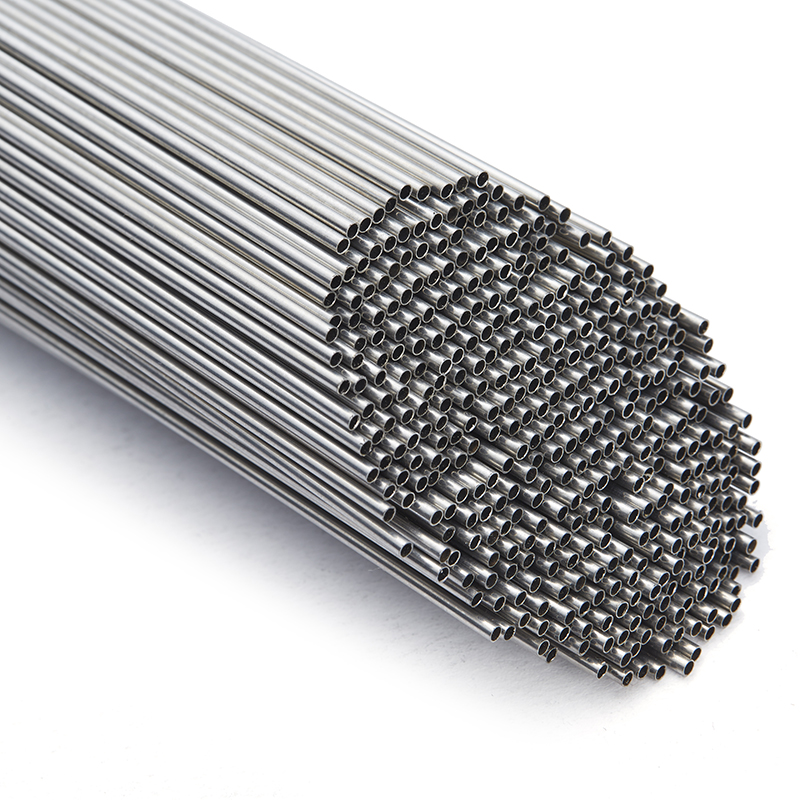
In refrigeration systems, the capillary tube acts as a simple yet effective throttling device. It controls the flow of refrigerant from the high-pressure side (condenser) to the low-pressure side (evaporator). The tube’s narrow diameter and length create resistance, causing a sharp drop in pressure as the refrigerant passes through. This pressure drop is essential for cooling because it allows the refrigerant to expand and evaporate inside the evaporator, absorbing heat and producing the desired cooling effect.
The capillary tube performs three main processes in refrigeration:
Throttling: The refrigerant enters the capillary tube as a high-pressure liquid. The tube’s small diameter restricts flow, causing a pressure drop due to friction and flow resistance.
Flashing: When pressure falls below the refrigerant’s saturation pressure, part of the liquid instantly vaporizes (flashes). This phase change absorbs heat, significantly lowering the refrigerant’s temperature.
Flow Control: The tube’s dimensions and surface condition regulate the refrigerant’s mass flow rate. This ensures a steady refrigerant supply matches the cooling load, maintaining system stability and efficiency.
Several factors influence how well a capillary tube performs:
Tube Diameter and Length: Smaller diameters and longer lengths increase resistance, reducing flow rate. Choosing the right size is critical for system balance.
Refrigerant Type: Different refrigerants have unique properties like viscosity and boiling points. Capillary tube dimensions must be tailored accordingly.
Ambient Temperature: Changes in surrounding temperature affect condensing pressure and refrigerant flow. Higher temperatures may increase flow, while lower temperatures reduce it.
Manufacturing Quality: Smooth inner walls and precise dimensions minimize flow disturbances and ensure consistent throttling.
Capillary tubes offer several benefits compared to expansion valves:
Simplicity: No moving parts mean fewer failures and easier maintenance.
Cost-Effectiveness: Lower manufacturing and installation costs make them ideal for small to medium refrigeration units.
Compactness: Small size suits space-constrained applications.
Reliability: They provide stable flow under steady conditions without the need for complex controls.
However, capillary tubes are less adaptable to varying loads than expansion valves, making them better suited for fixed-capacity systems like domestic refrigerators and window air conditioners.
Capillary tubes are vital components in refrigeration and HVAC systems. They function as throttling devices that regulate refrigerant flow from the condenser to the evaporator. The narrow diameter and length of the tube create a pressure drop, causing the refrigerant to expand and cool as it enters the evaporator. This process enables efficient heat absorption, producing the desired cooling effect.
Their simplicity and reliability make capillary tubes ideal for small to medium refrigeration units like domestic refrigerators, window air conditioners, and commercial coolers. Unlike complex expansion valves, capillary tubes have no moving parts, reducing maintenance needs and costs. However, they are best suited for fixed-load systems since they provide a constant flow rate without automatic adjustment to varying cooling demands.
In medical equipment, capillary tubes are indispensable for precise fluid control and sampling. Their small diameter allows collection of tiny blood volumes, essential for tests requiring minimal invasiveness. For example, capillary tubes are used in blood sampling devices where they draw blood by capillary action, enabling quick and accurate sample collection.
Additionally, they appear in infusion pumps, oxygen supply systems, and microfluidic devices, where precise fluid metering is critical. Glass capillary tubes are preferred here for their chemical inertness and transparency, allowing visual monitoring of fluid flow. The tubes’ reliability and accuracy help ensure patient safety and diagnostic accuracy.
Laboratories utilize capillary tubes extensively in instruments like chromatographs and fluid analyzers. In chromatography, capillary tubes enable the separation of chemical components by controlling solvent flow through a stationary phase. Their precise dimensions ensure consistent flow rates, critical for reproducible results.
Capillary tubes also assist in fluid mechanics studies by measuring properties such as viscosity and surface tension. Their ability to transport small fluid volumes without external pumps makes them ideal for microfluidics and analytical chemistry applications.
Automotive industries employ capillary tubes to regulate fuel flow in carburetors and fuel injection systems. The tubes’ precise control over small fluid volumes enhances engine efficiency and emissions control. Stainless steel capillary tubes, known for durability and corrosion resistance, are common in these high-pressure applications.
Hydraulic systems also rely on capillary tubes to control oil flow and pressure. Their robust construction and ability to withstand mechanical stress make them suitable for industrial machinery, ensuring smooth operation and safety.
Capillary tubes exploit capillary action to assist fluid movement in various industrial processes. They serve as wicking elements in devices like ink pens, where they draw ink to the tip for smooth writing. Similarly, in construction or chemical industries, capillary tubes aid in absorbing or transporting liquids across surfaces without pumps.
This passive fluid movement reduces energy consumption and simplifies device design, offering cost-effective solutions in many sectors.
Tip: When selecting capillary tubes for industrial applications, match tube material and dimensions to fluid type, pressure, and temperature to maximize efficiency and durability.
Capillary tubes are highly cost-effective components. They have no moving parts, which means fewer chances of mechanical failure. This simplicity reduces manufacturing costs and lowers maintenance expenses over time. For industries, this translates into reliable performance without frequent repairs or replacements. Their small size and lightweight nature also cut down on shipping and installation costs. In many refrigeration and fluid control systems, capillary tubes provide an affordable alternative to more complex devices like expansion valves, especially for fixed-load applications.
One of the main advantages of capillary tubes is their ability to provide precise control of fluid flow. The tube’s internal diameter and length directly influence the flow rate, allowing for predictable and repeatable fluid movement. This precision is critical in medical devices, chromatography, and HVAC systems where exact fluid dosing or refrigerant flow is necessary. Additionally, capillary tubes operate efficiently by using natural physical phenomena like surface tension and pressure drop, eliminating the need for external energy sources or pumps. This efficiency enhances energy savings and system reliability.
Despite their benefits, capillary tubes have some limitations. Their performance depends heavily on tube length and diameter; incorrect sizing can cause improper flow rates or pressure drops. Longer tubes may introduce delays in fluid response times and increase susceptibility to temperature variations. Ambient and process temperatures can cause the fluid inside the tube to expand or contract, potentially affecting measurement accuracy or flow stability. These temperature effects are especially critical in instrumentation applications where precise readings are vital. Therefore, capillary tubes may not be suitable for systems requiring variable flow control or rapid response.
Proper installation is essential to maximize capillary tube performance. Mounting the tube to avoid sharp bends or kinks prevents flow restrictions and pressure errors. It’s also important to shield the tube from extreme ambient temperatures or heat sources to reduce thermal effects on the fill fluid or process fluid. Selecting the right material—such as stainless steel, copper, or specialized alloys—depends on the fluid type, pressure, and environmental conditions. Using compatible materials prevents corrosion, ensures durability, and maintains accuracy over the tube’s lifespan.
Tip: Always match capillary tube length, diameter, and material to your specific application needs to optimize flow control and minimize temperature-related errors.
The manufacturer plays a vital role in delivering capillary tubes that meet strict quality standards. High-quality manufacturing ensures tubes have consistent inner diameters, smooth surfaces, and precise lengths. These factors directly affect flow control accuracy and system reliability. Reputable manufacturers implement rigorous quality control processes, including dimensional inspections and material testing, to guarantee performance. They also provide customization to match specific application needs, whether for refrigeration, medical devices, or industrial instrumentation.
Capillary seamless tubes are typically made through advanced extrusion or drawing processes. These methods involve pulling metal rods through dies to reduce diameter and wall thickness without welding. This seamless design prevents leaks and weak points, essential for high-pressure and precision applications. The manufacturing steps often include:
Tube Drawing: Multiple passes through dies reduce diameter to exact specifications.
Annealing: Heat treatment relieves stresses and improves ductility.
Straightening and Cutting: Ensures tubes are perfectly straight and cut to length.
Surface Finishing: Polishing or cleaning the inner surface to minimize friction and contaminants.
These steps require precise control to achieve tight tolerances often within microns, critical for capillary tubes.
Choosing the right material depends on the application environment and fluid characteristics. Common materials include:
Stainless Steel: Offers excellent corrosion resistance, strength, and durability. Ideal for harsh chemical environments and high-pressure systems.
Copper: Known for high thermal conductivity and ease of fabrication. Widely used in refrigeration and HVAC systems.
Brass: Combines corrosion resistance and machinability, suitable for moderate pressure and temperature applications.
Special Alloys: Nickel-based alloys or other specialty metals are used for extreme conditions requiring enhanced strength or corrosion resistance.
Material purity and consistency from suppliers also impact tube performance and longevity.
Manufacturing precision directly influences how well a capillary tube controls fluid flow. Even slight variations in inner diameter or surface roughness can cause significant changes in pressure drop and flow rate. Precise dimensions ensure repeatable and predictable behavior, which is crucial in sensitive applications like medical dosing or chromatography. Poorly manufactured tubes may introduce turbulence, leaks, or inconsistent flow, leading to system inefficiencies or failures. Therefore, investing in high-precision manufacturing processes and quality assurance is essential to optimize capillary tube performance.
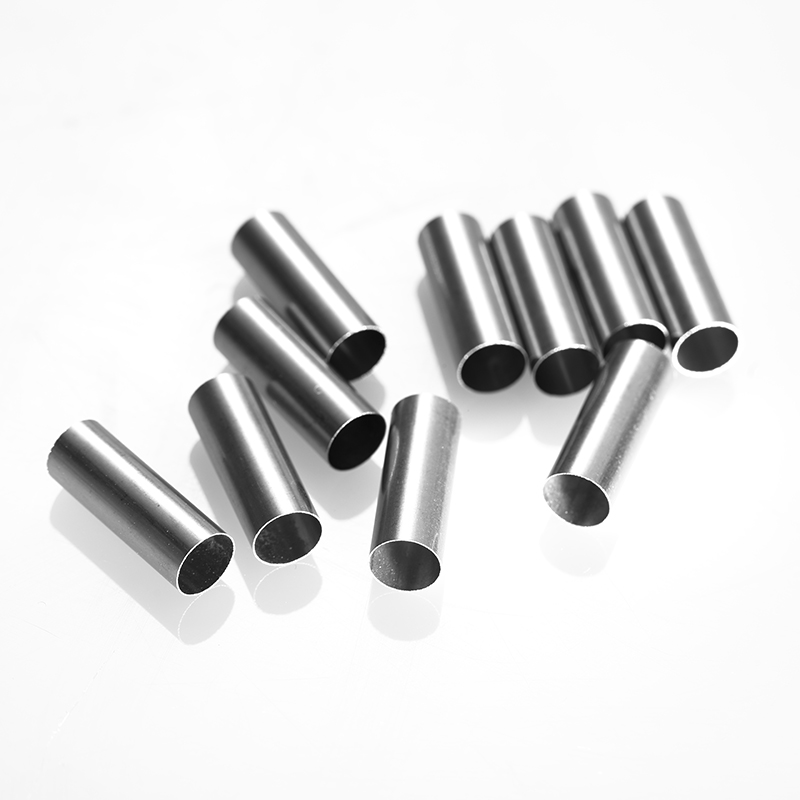
Correct mounting of capillary tubes is crucial to ensure accurate pressure and temperature readings. The tube must be installed without sharp bends, kinks, or twists that can restrict fluid flow or cause pressure drops. Avoid looping or coiling the tube excessively, as this may trap air or cause fluid stagnation.
Positioning the tube so it is level with or below the connected instrument helps prevent errors caused by fluid column height differences. On differential pressure instruments, equal lengths of capillary tubes on both high and low-pressure sides ensure balanced readings.
Mounting supports or clamps should secure the tube firmly but gently to prevent vibration or movement that might damage it or affect measurements. Proper routing away from heat sources or cold surfaces avoids unwanted thermal influences.
Temperature changes impact the fill fluid inside the capillary tube, causing expansion or contraction. This volume change can lead to pressure reading errors or delayed responses. To minimize this:
Keep the tube away from hot or cold surfaces.
Use insulation or protective sleeves to shield from ambient temperature swings.
Avoid placing the tube in direct sunlight or near machinery generating heat.
Select fill fluids with low thermal expansion coefficients when possible.
In high-temperature processes, longer tubes may help dissipate heat before reaching the instrument.
Process temperature also affects the tube and fill fluid. The capillary tube acts as a cooling barrier, isolating the instrument from extreme temperatures. However, rapid process temperature changes can still cause transient errors. Proper material selection and installation help mitigate these risks.
Regular inspection and maintenance extend the life and accuracy of capillary tubes:
Check for physical damage such as dents, corrosion, or cracks.
Ensure mounting supports remain secure.
Verify that no kinks or bends have developed over time.
Clean the tube externally to prevent dirt buildup that might affect heat transfer.
Replace tubes showing signs of wear or damage promptly.
Periodically recalibrate instruments connected via capillary tubes to account for any drift.
Avoid using excessive force when handling the tubes during maintenance. Gentle handling preserves the tube’s integrity and prevents leaks or flow restrictions.
Capillary tubes allow pressure or temperature instruments to be located remotely from the process connection. This setup offers several advantages:
Safety: Instruments can be placed in accessible, safe areas away from hazardous or high-temperature zones, protecting personnel.
Convenience: Easier access for monitoring, calibration, and maintenance without disturbing the process.
Reduced Heat Exposure: The tube acts as a thermal barrier, protecting sensitive instruments from extreme process temperatures.
Flexibility: Instruments can be installed in optimal locations regardless of process constraints.
Using capillary tubes for remote measurement improves system reliability and operational safety, especially in industrial environments with harsh conditions.
Tip: Always route capillary tubes carefully, avoid sharp bends, and shield them from temperature extremes to ensure accurate readings and long service life.
Capillary tubes use surface tension and pressure drop to control fluid flow precisely. They serve vital roles in refrigeration, medical devices, and industrial systems. Advances in seamless tube technology improve durability and accuracy for demanding applications. Choosing the right manufacturer ensures quality and tailored solutions. HUASHANG STEEL offers high-precision capillary tubes that enhance performance and reliability across industries. Their products combine strength, precision, and cost-effectiveness, making them a trusted partner for fluid control needs.FAQ
A: A capillary tube is a narrow tube that uses capillary action—surface tension, adhesion, and cohesion—to move liquids precisely. It also relies on pressure drop caused by its small diameter to regulate fluid flow without pumps.
A: Precision capillary seamless tubes ensure consistent inner diameter and smooth surfaces, providing accurate flow control and durability. Trusted manufacturers guarantee quality and customization for specific industrial needs.
A: Ultra thin wall tubes maximize flow rate with minimal thickness, ideal for precision instruments, while ultra thick wall tubes offer enhanced strength for high-pressure applications.
A: Capillary tubes are used in refrigeration, medical devices, chromatography, automotive fuel systems, and hydraulic machinery for precise fluid regulation and reliable performance.
A: Capillary tubes are more cost-effective due to their simple design with no moving parts, reducing manufacturing, installation, and maintenance expenses.
A: Check for tube kinks, improper diameter or length, temperature effects, and ensure the tube is from a reputable capillary tube manufacturer to avoid manufacturing defects.


