
- Home
- Products
- About Us
- Quality
- Application
- Services & Support
- Blogs
- Contact
Views: 0 Author: Site Editor Publish Time: 2026-04-24 Origin: Site


Is seamless pipe truly stronger than welded pipe? This common question has major implications for industries requiring high-performance piping. Choosing the right pipe—whether seamless or welded—depends on factors like strength, cost, and application.
In this post, we’ll compare seamless and welded pipes, focusing on their structural integrity, pressure resistance, and durability. You’ll learn why seamless pipe often outperforms welded pipe in demanding environments.
At Huashang Steel, our high-quality seamless pipes are trusted for their strength and reliability in critical industries.
Seamless pipes are designed without a weld seam, providing a uniform material structure. This lack of a welded joint ensures that the pipe’s strength is consistent across its entire length. In comparison, welded pipes have a seam, which is often the weakest point. This gives seamless pipes an edge when it comes to pressure resistance and durability.
Key factors contributing to the structural integrity of seamless pipes:
No Weld Seam: The absence of a weld means there are no weak points along the pipe.
Uniform Material: Seamless pipes are made from a single piece of metal, ensuring an even distribution of stress.
In industries where reliability is crucial, such as aerospace, oil & gas, and power generation, seamless pipes are often preferred. For example, in oil pipelines where high-pressure environments are common, seamless pipes can handle the stress better, ensuring a longer lifespan and lower maintenance costs.
Welded pipes, while more affordable to produce, come with certain structural vulnerabilities. The weld seam can become a point of weakness, especially under high stress or pressure. Areas around the weld seam may experience stress concentration, which can lead to cracks or failure if not properly treated or maintained.
Weld Seam Weakness: The weld area is more prone to defects, stress, and corrosion.
Stress Concentration: This occurs when force is unevenly distributed, causing additional strain at the weld.
Despite these challenges, welded pipes can still perform well in many situations. For instance, in construction and water distribution, where the pressure requirements are lower, welded pipes are a cost-effective solution. Modern welding techniques, such as Electric Resistance Welding (ERW), have significantly improved the reliability of welded pipes. These pipes are commonly used for non-critical systems where budget and size flexibility are more important than strength.
Welded pipes are ideal for:
General Industrial Use: For example, water systems and general plumbing.
Construction: Structural supports and scaffolding where high pressure isn’t a concern.
While welded pipes may not be suitable for high-pressure environments, their ability to be manufactured in larger diameters and at lower costs makes them a practical option for many standard applications.
Feature | Seamless Pipe | Welded Pipe |
Manufacturing Process | Single billet extrusion | Welded from rolled metal sheets |
Strength Distribution | Uniform throughout the pipe | Weaker at the weld seam |
Pressure Resistance | Higher (up to 20% more capacity) | Lower under high-pressure conditions |
Cost | More expensive | More affordable |
Applications | High-pressure, high-temperature | General plumbing, construction |
Consider a power plant where steam must be transferred at high pressure. A seamless pipe will offer superior strength and long-term durability, reducing the likelihood of leaks or failures. On the other hand, a construction project that requires water transport at moderate pressure may opt for welded pipes due to their cost-effectiveness and adequate performance for such applications.
Seamless pipes may cost more upfront, but for industries where performance is critical, like aerospace or oil & gas, the investment is worth it for their enhanced reliability and lower risk of failure.
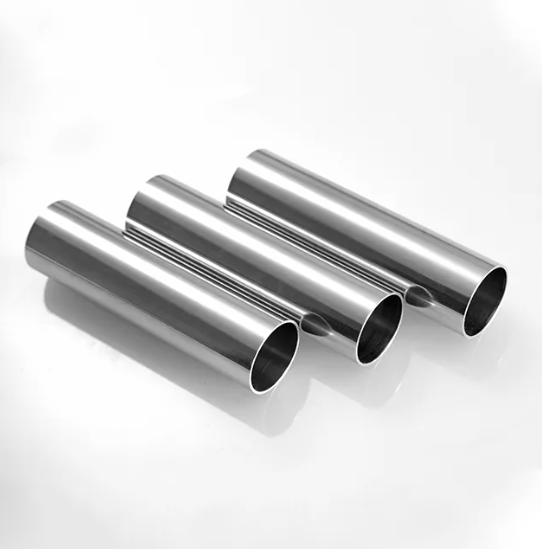
When it comes to pressure resistance, seamless pipes stand out. Unlike welded pipes, seamless pipes have no seam, which makes them structurally more robust. This continuous material allows seamless pipes to handle significantly higher pressure without failure. The absence of a weld seam eliminates weak points, ensuring even distribution of stress and pressure across the pipe's entire surface.
Key reasons for higher pressure capacity in seamless pipes:
Uniform Structure: No weld seam means consistent material strength along the entire pipe.
Better Stress Distribution: Pressure is evenly spread, reducing the likelihood of failure under stress.
Industries that rely on high-pressure applications include:
Power Generation: Steam turbines and high-pressure boilers demand pipes that can withstand intense pressures without leaking.
Oil & Gas: Pipelines transporting crude oil or natural gas must maintain integrity under high pressure over long distances.
Aerospace: Aircraft systems require pipes that can handle extreme pressure conditions without compromising safety.
In these sectors, Seamless Pipe vs welded is clear — seamless pipes are the preferred choice for their ability to endure high-pressure environments safely.
While welded pipes are useful in many industrial applications, they have limitations when it comes to pressure resistance. The presence of a weld seam makes them more susceptible to pressure failures, especially under extreme conditions. The weld areas can become stress concentration points, which increases the risk of cracks or failure in high-pressure environments.
Weakness at the Weld Seam: The welded area can weaken under stress, making it vulnerable to rupture or cracks.
Potential for Corrosion: Weld seams may experience localized corrosion due to impurities during the welding process.
Despite these limitations, welded pipes are still suitable for moderate pressure applications, where extreme resistance isn't as critical:
Water Distribution: Pipes used in water systems where pressure levels are relatively low.
Construction: Used for structural applications such as scaffolding or non-critical systems.
Heating Systems: For systems that don't operate under high pressure.
Welded pipes can still perform well when the pressure is controlled and not excessive, offering a more affordable solution for many industries.
Feature | Seamless Pipe | Welded Pipe |
Pressure Resistance | Higher, suitable for high-pressure systems | Limited, suitable for moderate pressures |
Weak Points | No seam, uniform strength | Weak at the weld seam |
Applications | Power generation, oil & gas, aerospace | Water distribution, construction |
Cost | Higher due to manufacturing complexity | More affordable |
Take oil and gas pipelines, for example. They need to withstand high pressures over long distances. A seamless pipe is crucial here, as it can handle the pressure without the risk of seam-related failures. On the other hand, a welded pipe would suffice for a plumbing system in a low-pressure residential building.
In industries where safety and reliability are non-negotiable, seamless pipes are the better choice for pressure-intensive environments, ensuring long-term performance and security.
One of the most common misconceptions is that seamless pipes are always superior to welded pipes. While seamless pipes excel in certain conditions, they aren’t always the best choice. There are situations where welded pipes provide better solutions due to factors like cost, size flexibility, and production speed.
Key points to consider:
Cost: Seamless pipes are more expensive to manufacture due to their complex production process. Welded pipes, being cheaper to produce, are often the preferred choice for budget-conscious projects.
Size Flexibility: Welded pipes can be made in larger diameters, which makes them ideal for certain applications like structural support or large infrastructure projects.
Pressure Requirements: While seamless pipes handle high pressure better, welded pipes can work fine for moderate pressure systems.
Real-life examples:
Construction Projects: Large-scale construction projects where size and cost are the priority might opt for welded pipes, as they can be manufactured in larger sizes at a lower cost.
Water Distribution Systems: For water pipes in non-critical areas, welded pipes provide an adequate solution without the high price tag of seamless options.
Another myth is that welded pipes are inherently weak and cannot perform in demanding environments. This was true in the past when older welding techniques limited their strength. However, modern advancements in welding technology have significantly improved the strength and reliability of welded pipes.
Key advancements in welding:
Electric Resistance Welding (ERW): ERW is one of the most common welding techniques used today. It offers excellent corrosion resistance and ensures the integrity of the pipe.
Laser Welding: Laser welding has improved the precision and strength of welded pipes, making them suitable for high-demand applications. This method reduces heat-affected zones and provides a cleaner, stronger weld.
Better Material Quality: Modern welded pipes are made from high-quality materials that can withstand stress and pressure in many industrial applications.
Welded pipes are now widely used in industries such as:
Petrochemical: Where moderate pressure handling is required and cost-effectiveness is a key factor.
Automotive and Aerospace: Where welded pipes are used for structural parts, offering a good balance of strength and cost.
Feature | Seamless Pipe | Welded Pipe |
Strength | Superior under high pressure | Adequate under moderate pressure |
Manufacturing Cost | More expensive | More affordable |
Size Flexibility | Limited to smaller sizes | Can be made in larger diameters |
Welding Technology | No welding seam | Advanced welding techniques (ERW, laser) |
Applications | High-pressure, high-temperature | Moderate pressure, general construction |
By addressing these myths, it's clear that both seamless and welded pipes have their place depending on the specific needs of a project. Whether it's cost, pressure handling, or size, both types have advantages that make them suitable for different applications.
In summary, seamless pipes are stronger, offering better pressure resistance, while welded pipes are more cost-effective and suitable for moderate pressure applications.
When choosing, consider your project’s needs:
Seamless pipes for high-pressure, high-strength scenarios.
Welded pipes for cost-effective, large-scale, and moderate-pressure projects.
At Huashang Steel, we offer both seamless and welded pipes, providing tailored solutions to meet your specific requirements.
A: The main advantage is seamless pipes have no weld seam, providing uniform strength and better pressure resistance, especially in high-stress environments.
A: No, welded pipes are generally weaker at the weld seam, while seamless pipes offer superior strength and integrity throughout.
A: Seamless pipes require a more complex manufacturing process, such as extrusion, which increases production costs compared to welded pipes.
A: Welded pipes are suitable for moderate pressure applications, but they are not ideal for high-pressure systems due to potential weaknesses at the weld seam.
A: Seamless pipes are commonly used in high-pressure industries such as oil & gas, aerospace, and power generation.


