- Home
- Products
- About Us
- Quality
- Application
- Services & Support
- Blogs
- Contact


| Quantity: | |
|---|---|


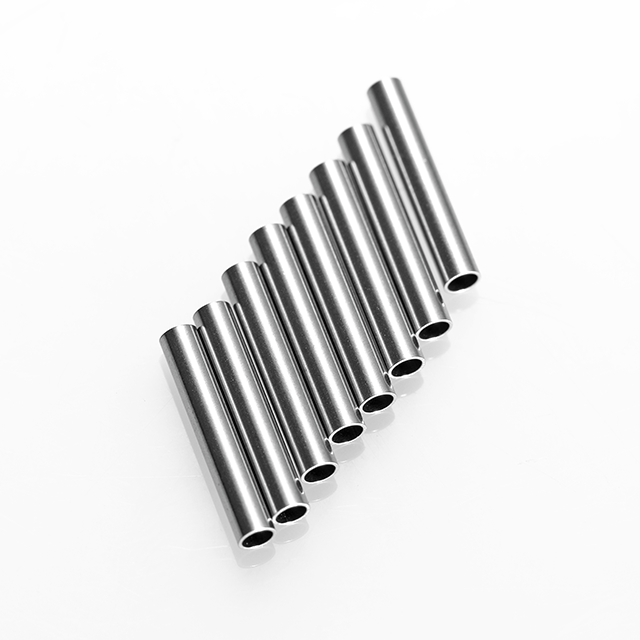
Inconel 625 Micro Tube is a nickel-chromium-molybdenum-niobium alloy tubing designed for severe service environments. This material, designated as UNS N06625. 2.4856, contains nickel (Ni) ≥58%, chromium (Cr) 20-23%, molybdenum (Mo) 8-10%, and niobium plus tantalum (Nb+Ta) 3.15-4.15%. This chemical composition provides resistance to chloride corrosion, pitting and crevice corrosion, and oxidation up to 980°C. The alloy also maintains fatigue strength, pressure capability, weldability, and cryogenic toughness across various operating conditions.
Manufactured according to ASTM B444, ASTM B704, ASTM B705, ASME SB444, ASME SB704, and ASME SB705 standards, these micro tubes undergo production processes including billet inspection, piercing or extrusion, multi-pass cold drawing, intermediate annealing, precision sizing, bright annealing, straightening, cutting, ultrasonic cleaning, and final inspection. Each step includes traceability documentation for commercial procurement and quality assurance purposes.
 |  |  |
Parameter | Range |
|---|---|
Outside Diameter (OD) | 0.20 mm - 10 mm |
Inside Diameter (ID) | 0.05 mm - 6 mm |
Wall Thickness (WT) | 0.05 mm - 2.00 mm |
Length | Up to 6000 mm |
Surface Finish | BA / Pickled / Polished |
Tolerance | ±0.005 mm to ±0.05 mm |
0.20 × 0.05 mm, 0.30 × 0.05 mm, 0.50 × 0.10 mm, 0.71 × 0.10 mm, 1.00 × 0.15 mm, 1.50 × 0.20 mm, 2.00 × 0.20 mm, 3.00 × 0.30 mm, 4.00 × 0.50 mm, and 6.00 × 0.50 mm. Custom sizes and tolerances are available based on customer drawings and specifications for industrial applications.
Every Inconel 625 micro tube receives dimensional inspection including outside diameter, inside diameter, wall thickness, length, straightness, and ovality verification. Chemical composition analysis uses spectrometer testing with heat number traceability throughout production. Positive Material Identification (PMI) testing is available at 100% coverage for critical applications.
Mechanical testing includes tensile strength, yield strength, elongation, hardness, flattening, and flaring evaluations. Metallurgical examination covers grain size analysis, microstructure examination, and intergranular corrosion testing. Non-destructive testing methods include eddy current testing (ECT), ultrasonic testing (UT), dye penetrant testing (PT), and hydrostatic testing. For aerospace, hydrogen, LNG, and nuclear projects, additional testing includes hydrogen compatibility assessment, ferrite content measurement, and cleanliness inspection.
 |  |  |
 |  |  |
 |  |  |
Inconel 625 micro tubes function in hydrogen pre-cooling systems, hydrogen refueling stations, hydrogen compressors, and fuel cell cooling systems. For LNG and cryogenic equipment, the tubing serves in LNG heat exchangers, LNG vaporizers, liquid hydrogen transfer systems, and cryogenic process equipment. The material maintains mechanical properties at extremely low temperatures for these business operations.
The precision tubing suits compact heat exchangers, microtube heat exchangers, and advanced thermal management systems. In aerospace applications, the material appears in aircraft cooling systems, rocket propulsion systems, satellite thermal management, and aerospace fuel systems. Additional industrial uses include seawater cooling systems, offshore platforms, subsea equipment, acid transfer lines, chemical injection systems, and nuclear power heat transfer equipment.
Manufacturing capabilities extend to outside diameters as small as 0.20 mm and wall thicknesses as thin as 0.05 mm. Dimensional tolerances range from ±0.005 mm to ±0.05 mm based on specifications.
Standard inspection includes dimensional verification, chemical composition analysis, mechanical testing, and non-destructive evaluation. Additional testing such as PMI, hydrogen compatibility, and cleanliness inspection is available for specialized projects.
Custom dimensions, tolerances, and configurations are available according to customer drawings and technical requirements for both prototype and production quantities.