- Home
- Products
- About Us
- Quality
- Application
- Services & Support
- Blogs
- Contact
Views: 0 Author: Site Editor Publish Time: 2025-12-25 Origin: Site


Duplex Steel Seamless Pipes represent a revolutionary advancement in industrial piping solutions, combining the best properties of austenitic and ferritic stainless steels. These high-performance pipes feature a two-phase microstructure that delivers exceptional corrosion resistance, superior mechanical strength, and outstanding durability in the most demanding industrial environments.
As a leading Duplex Steel Seamless Pipe manufacturer, we understand that selecting the right piping material is critical for operational efficiency, safety, and long-term cost-effectiveness. This comprehensive guide explores the fundamental characteristics, manufacturing processes, applications, and advantages of Duplex Stainless Steel Seamless Pipes, helping engineers, procurement specialists, and industrial decision-makers make informed choices for their projects.
Whether you're working in oil and gas, chemical processing, marine engineering, or power generation, understanding the unique properties of Industrial Duplex Steel Seamless Pipes will help you optimize performance while reducing maintenance costs and extending equipment lifespan.
Duplex Stainless Steel Seamless Pipe products are manufactured from a specialized alloy that contains roughly equal proportions of austenite and ferrite phases in its microstructure. This balanced composition creates a material that outperforms conventional stainless steels in multiple critical parameters.
The austenitic phase provides excellent corrosion resistance and toughness, while the ferritic phase contributes high strength and resistance to stress corrosion cracking. This synergistic combination makes Custom Duplex Steel Seamless Pipes ideal for applications where both structural integrity and corrosion protection are paramount.
Standard duplex grades typically contain 22-25% chromium, 3-7% nickel, and additions of molybdenum and nitrogen. Super duplex variants feature even higher alloy content, with chromium levels reaching 25-29%, providing enhanced resistance to pitting and crevice corrosion in chloride-rich environments.
The most commonly specified grades for Heavy Duty Duplex Steel Seamless Pipes include:
| Grade | Common Names | Chromium (%) | Nickel (%) | Molybdenum (%) | Key Features |
|---|---|---|---|---|---|
| UNS S31803/S32205 | 2205 Duplex | 22-23 | 4.5-6.5 | 3.0-3.5 | Standard duplex, excellent balance |
| UNS S32750 | 2507 Super Duplex | 24-26 | 6.0-8.0 | 3.0-5.0 | Superior corrosion resistance |
| UNS S32760 | Zeron 100 | 24-26 | 6.0-8.0 | 3.0-4.0 | Enhanced pitting resistance |
| UNS S32304 | 2304 Lean Duplex | 21.5-24.5 | 3.0-5.5 | 0.1-0.6 | Cost-effective alternative |
These grades are carefully engineered to meet specific application requirements, from standard industrial use to extreme environments requiring High Pressure Duplex Steel Seamless Pipes.
Unlike welded pipes, Duplex Steel Seamless Pipes are produced without any longitudinal seam, eliminating potential weak points and ensuring uniform strength throughout the pipe wall. This manufacturing approach is particularly critical for High Strength Duplex Steel Seamless Pipes used in high-pressure applications.
The seamless manufacturing process involves several sophisticated stages:
Hot Piercing and Extrusion: Solid cylindrical billets of duplex steel are heated to approximately 1200-1250°C and pierced using a rotary piercing mill. The pierced billet is then elongated and reduced in diameter through hot extrusion or pilgering processes.
Heat Treatment: Critical to achieving the optimal austenite-ferrite balance, solution annealing is performed at temperatures between 1020-1100°C, followed by rapid water quenching. This process ensures the proper microstructure and mechanical properties.
Cold Finishing: For applications requiring tight dimensional tolerances and superior surface finish, cold drawing or cold rolling processes are applied, enhancing mechanical properties and surface quality.
Our quality assurance processes for Industrial Duplex Steel Seamless Pipes include:
Chemical Composition Analysis: Optical emission spectrometry ensures alloy content meets specification requirements
Mechanical Testing: Tensile strength, yield strength, and elongation testing per ASTM A789/A790 standards
Non-Destructive Testing: Ultrasonic testing, eddy current testing, and hydrostatic pressure testing
Corrosion Resistance Verification: Ferrite content measurement and critical pitting temperature (CPT) testing
Dimensional Inspection: Precise measurement of outer diameter, wall thickness, and length tolerances
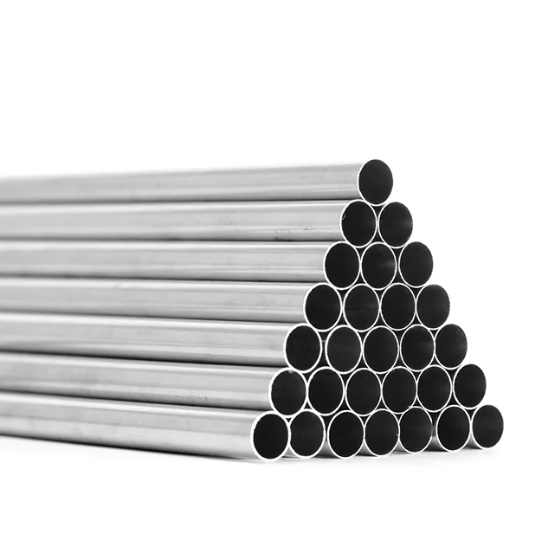
High Strength Duplex Steel Seamless Pipes offer yield strengths approximately twice that of conventional austenitic stainless steels. The typical yield strength ranges from 450-550 MPa for standard duplex grades and can exceed 550 MPa for super duplex variants.
This exceptional strength allows for:
Reduced wall thickness requirements, lowering material costs and weight
Higher allowable working pressures in High Pressure Duplex Steel Seamless Pipe applications
Enhanced resistance to mechanical stress and impact loading
Improved structural stability in large-diameter piping systems
The corrosion resistance of Duplex Stainless Steel Seamless Pipes surpasses standard austenitic grades in multiple corrosion modes:
Pitting and Crevice Corrosion: The high chromium, molybdenum, and nitrogen content creates a Pitting Resistance Equivalent Number (PREN) exceeding 35 for standard duplex and 40+ for super duplex grades, providing excellent resistance in chloride environments.
Stress Corrosion Cracking (SCC): The ferritic phase significantly reduces susceptibility to chloride-induced SCC, a common failure mode in austenitic stainless steels exposed to marine or brackish water environments.
General and Uniform Corrosion: The chromium-rich passive film provides robust protection against acidic and alkaline media, making Custom Duplex Steel Seamless Pipes suitable for diverse chemical processing applications.
Erosion-Corrosion Resistance: The combination of high strength and corrosion resistance makes these pipes ideal for high-velocity fluid service where erosion-corrosion is a concern.
The oil and gas sector represents one of the largest markets for Heavy Duty Duplex Steel Seamless Pipes. These pipes excel in:
Offshore Production: Subsea pipelines, risers, and flowlines handling corrosive hydrocarbons, seawater injection systems, and produced water handling benefit from the exceptional corrosion resistance and strength-to-weight ratio.
Processing Facilities: Heat exchangers, pressure vessels, and process piping in refineries and gas processing plants utilize duplex pipes to handle corrosive fluids at elevated temperatures and pressures.
Enhanced Oil Recovery: Water injection systems, where seawater or produced water is injected at high pressures, require the robust corrosion resistance that High Pressure Duplex Steel Seamless Pipes provide.
Chemical manufacturers specify Industrial Duplex Steel Seamless Pipes for handling aggressive media including:
Organic and inorganic acids
Chloride-containing solutions
High-temperature corrosive environments
Mixed acid systems in fertilizer production
Polymer and plastics processing equipment
The marine industry extensively uses Duplex Stainless Steel Seamless Pipes due to their outstanding resistance to seawater corrosion. Applications include:
Seawater Cooling Systems: Ships, offshore platforms, and coastal power plants rely on duplex piping for reliable seawater circulation without the galvanic corrosion concerns of copper-nickel alloys.
Desalination Plants: Reverse osmosis and thermal desalination facilities use these pipes throughout their systems, from seawater intake to brine discharge, where chloride concentrations can exceed 60,000 ppm.
Power plants increasingly adopt Custom Duplex Steel Seamless Pipes for:
Flue gas desulfurization (FGD) systems handling corrosive scrubbing solutions
Cooling water systems in coastal facilities
Geothermal power applications with high chloride and sulfide content
Biomass and waste-to-energy plants with aggressive flue gas compositions
Engineers should consider Duplex Steel Seamless Pipe solutions when projects involve:
Chloride-Rich Environments: Applications with chloride concentrations exceeding 1,000 ppm where austenitic stainless steels are prone to SCC
High-Pressure Requirements: Systems operating above 100 bar where wall thickness reduction is economically beneficial
Temperature Range: Service temperatures between -50°C and 250°C (standard duplex) or up to 300°C (super duplex)
Corrosive Media: Environments combining mechanical stress with corrosive conditions
Weight-Critical Applications: Offshore structures, aerospace, or transportation where weight reduction is valuable
| Property Comparison | Austenitic 316L | Standard Duplex 2205 | Super Duplex 2507 |
|---|---|---|---|
| Initial Material Cost (Relative) | 1.0x | 1.2-1.4x | 1.8-2.2x |
| Required Wall Thickness | 100% | 60-70% | 60-70% |
| Lifetime Cost (Including Maintenance) | High | Medium | Low |
| Corrosion Allowance | Required | Minimal | Minimal |
| Expected Service Life in Seawater | 10-15 years | 25-30 years | 30-40+ years |
While initial material costs for Duplex Stainless Steel Seamless Pipes may be higher, the total cost of ownership typically proves lower due to extended service life, reduced maintenance, and thinner wall requirements.
Proper welding technique is critical when fabricating with High Strength Duplex Steel Seamless Pipes. Key considerations include:
Filler Metal Selection: AWS ER2209 for standard duplex and ER2594 for super duplex grades, typically with slightly higher nickel content than the base material to compensate for ferrite formation in the weld.
Heat Input Control: Maintaining heat input between 0.5-2.5 kJ/mm prevents excessive ferrite formation and preserves corrosion resistance. Interpass temperatures should not exceed 150°C.
Post-Weld Treatment: Solution annealing at 1020-1100°C may be required for thick-wall pipes or critical applications to restore optimal microstructure and corrosion resistance.
Our service and support guidelines for Heavy Duty Duplex Steel Seamless Pipes recommend:
Storage in clean, dry environments isolated from carbon steel to prevent contamination
Use of non-metallic slings and protective materials during handling
Proper end protection to prevent damage and contamination
Segregation by grade and heat number for traceability
Research and development efforts continue to enhance Duplex Steel Seamless Pipe technology:
Hyper Duplex Alloys: Emerging grades with PREN values exceeding 50, offering corrosion resistance approaching nickel-based superalloys at significantly lower cost.
Lean Duplex Developments: Cost-optimized compositions with reduced nickel content for applications where standard duplex exceeds requirements.
Enhanced Manufacturing: Advanced thermomechanical processing techniques improving grain refinement and mechanical properties.
Modern Duplex Stainless Steel Seamless Pipe manufacturing increasingly focuses on:
Reduced energy consumption through optimized heat treatment cycles
Higher recycled content in raw materials (70-90% recycled stainless steel)
Extended service life reducing lifecycle environmental impact
Full recyclability at end of service life
Duplex Steel Seamless Pipes feature a two-phase microstructure combining austenite and ferrite, providing approximately twice the strength of austenitic grades like 316L while offering superior resistance to stress corrosion cracking. This allows for thinner walls and reduced material costs in high-pressure applications.
Standard Duplex Stainless Steel Seamless Pipes perform well up to 250°C, while super duplex grades can handle temperatures up to 300°C. For applications exceeding these temperatures, austenitic or nickel-based alloys are typically more suitable due to potential precipitation of detrimental phases in duplex steels at elevated temperatures.
Selection depends on chloride concentration, temperature, pressure, and specific corrosive media. For seawater applications, 2205 duplex typically suffices. For higher chloride levels or more aggressive conditions, super duplex grades like 2507 are recommended. Consulting with a Duplex Steel Seamless Pipe manufacturer ensures optimal grade selection.
Industrial Duplex Steel Seamless Pipes have higher initial material costs (20-40% more than 316L austenitic steel), but lower total cost of ownership. The ability to use thinner walls, reduced maintenance requirements, and extended service life—often 2-3 times longer than austenitic alternatives—typically result in significant lifecycle cost savings.
High Pressure Duplex Steel Seamless Pipes should conform to ASTM A789/A790, EN 10216-5, or equivalent international standards. Quality requirements include chemical composition verification, mechanical testing, non-destructive testing (ultrasonic or eddy current), dimensional inspection, and corrosion resistance testing including ferrite content measurement and intergranular corrosion testing per ASTM A262.
Duplex Steel Seamless Pipes represent a superior solution for demanding industrial applications requiring exceptional corrosion resistance, high mechanical strength, and long-term reliability. From offshore oil production to chemical processing and marine systems, these advanced piping products deliver performance that conventional stainless steels simply cannot match.
As industries continue to push operational boundaries with higher pressures, more corrosive environments, and stricter safety requirements, the role of Custom Duplex Steel Seamless Pipes will only expand. Their unique combination of properties—roughly twice the strength of austenitic stainless steel, superior resistance to stress corrosion cracking, and excellent performance in chloride-rich environments—makes them an increasingly essential component in modern industrial infrastructure.
When selecting piping materials for your next project, consider the long-term value proposition of Duplex Stainless Steel Seamless Pipes. While initial costs may be higher, the reduced maintenance, extended service life, and improved safety margins typically result in substantial lifecycle cost savings and enhanced operational reliability.
For technical support, product specifications, or to discuss your specific application requirements, contact our experienced engineering team who can provide customized solutions tailored to your project needs.