
Views: 0 Author: Site Editor Publish Time: 2026-05-25 Origin: Site


When sourcing aircraft-grade AMS stainless steel tubing, the most critical factors are not only compliance with aerospace standards but also delivery speed, consistency, and manufacturing traceability.
Many buyers initially search through distributors, but this often leads to delays, inconsistent inventory, and limited technical control. In contrast, working directly with an AMS stainless steel tubing manufacturer ensures immediate production scheduling, stable quality control, and faster bulk shipment capability.
This guide explains how to identify a reliable manufacturer and why factory-direct sourcing is the most efficient solution for aerospace, defense, and high-precision industrial applications.
Specification Shifts: AMS specifications have largely superseded legacy MIL-T standards; ensure your supplier's inventory reflects these updated aerospace norms.
Traceability is Non-Negotiable: Immediate availability is worthless without AS9100 certification and accompanying Mill Test Reports (MTRs) for full material traceability.
Strategic Grade Selection: Understand the availability differences between common austenitic grades (304/L) and specialized or high-temperature grades (321, 21-6-9) when sourcing bulk inventory.
Value-Added Processing: Suppliers offering in-house secondary services (custom cutting, polishing) significantly reduce total turnaround time compared to routing raw materials through third-party processors.
A capable supplier holds inventory across multiple structural forms. They should stock seamless, drawn, and welded varieties. Different aircraft components demand different engineering approvals. Hydraulic systems might mandate seamless tubes, while structural frames often allow welded options. When a distributor maintains depth across all these categories, they instantly increase your chances of finding exact matches.
You also need to evaluate volume realities carefully. The definition of "bulk" in the aerospace sector is relative to the specific material grade. Standard austenitic grades are widely available in high quantities. Specialized precipitation-hardened tubes might only exist in smaller, scattered lots. You must evaluate if the supplier can fulfill immediate blanket orders from their own warehouse shelves.
When expediting bulk orders, you must clearly define your packaging requirements upfront. Rapid transit often subjects cargo to harsh vibrations and rough handling. Inadequate crating frequently leads to tube deformation or severe edge damage. Damaged ends render precision aerospace components completely unusable, defeating the purpose of an expedited shipment. Always specify rigid wooden crating and individual tube sleeving for sensitive wall thicknesses.
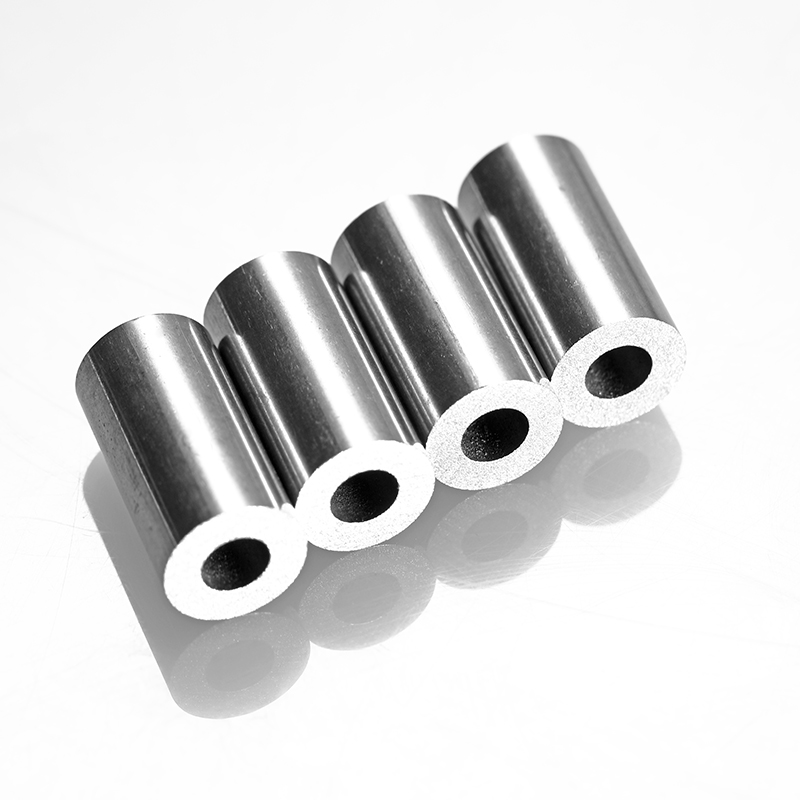
Quality aerospace stainless steel tubing packed securely to prevent transit damage.
Sourcing suitable materials requires a firm grasp of shifting industry standards. You must confirm your supplier deeply understands current compliance requirements. For example, AMS 5565 has officially superseded the canceled MIL-T-8506 standard for specific 304 requirements. Purchasing departments relying on outdated prints face heavy compliance bottlenecks if they do not map old specs to current AMS equivalents.
The 304 and 304L grades form the baseline for aerospace structural and hydraulic applications. They offer excellent formability and reliable corrosion resistance. When sourcing bulk inventory, look for stock in specific temper conditions. The industry primarily relies on Annealed (soft) or 1/8 Hard (1/8HD) tempers. These conditions ensure the tubing remains workable during secondary fabrication steps.
Jet engine components and exhaust systems operate in extremely hostile environments. Standard 304 tubing degrades quickly under continuous intense heat. For these applications, engineers specify 321 stainless steel. This grade is titanium-stabilized to prevent dangerous chromium carbide precipitation. It maintains structural integrity and resists intergranular corrosion in the 800°F to 1500°F (427°C to 816°C) continuous operating range. When verifying stock, look directly for AMS 5570 compliance.
Certain aerospace applications push physical boundaries, requiring highly specialized alloys. Distributors stocking these extreme grades demonstrate true aerospace capability.
21-6-9 Stainless: This is a high-manganese and high-nitrogen grade. It retains excellent toughness down to extreme cryogenic temperatures (-423°F / -230°C). Spacecraft and advanced high-altitude systems rely heavily on this material.
Precipitation-Hardened (PH): Grades like 15-5PH and 17-4PH cater to high-strength requirements. They undergo specialized heat treatments to achieve exceptional load-bearing capacities for landing gear and critical structural joints.
Below is a quick reference chart to help you align legacy specifications with modern AMS requirements during your sourcing process.
Alloy Grade | Typical Temper | Superseded Legacy Spec | Current AMS Standard | Primary Aerospace Application |
|---|---|---|---|---|
304 / 304L | Annealed, 1/8 Hard | MIL-T-8506 | AMS 5565 / AMS 5564 | Hydraulic lines, general structures |
321 | Annealed | MIL-T-8808 | AMS 5570 | Engine exhausts, high-heat zones |
21-6-9 | Annealed | N/A | AMS 5561 / AMS 5562 | Cryogenic fluid transfer systems |
17-4 PH | Condition A (Base) | MIL-T-81556 | AMS 5568 | High-stress mechanical linkages |
Tip: Create a structured "Grade-Temper-Specification" cheat sheet when sending Request for Quotes (RFQs) to distributors. Specifying "321 Annealed to AMS 5570" yields dramatically faster and more accurate bulk availability responses than requesting generic "321 aerospace tubing."
Desperation breeds poor decision-making. When production lines face imminent shutdowns, buyers sometimes overlook critical warning signs. Expediting aerospace alloys requires even tighter scrutiny than standard purchasing. Watch out for these three major red flags.
First, be highly skeptical of "equivalent" material offers. Sometimes a supplier offers an industrial-grade tube claiming it is functionally equivalent to a requested AMS spec. Aerospace engineering operates on exact mathematical margins. Exact specification adherence is mandatory. An industrial tube might share the same base chemistry but lack the required microstructural consistency or rigorous defect testing mandated by AMS standards.
Second, completely reject delayed documentation promises. Traceability must travel with the physical asset. Without the MTRs in hand, your quality control department cannot legally receive or clear the material for production. The metal will simply sit in quarantine, wasting valuable floor space.
Third, watch out for vague dimensional tolerances. Aerospace tubing demands remarkably strict dimensional control. Standard commercial tubing might drift significantly in wall thickness. Aerospace applications often require strict +/- 10% wall thickness tolerances to calculate exact weight and pressure bursting limits. Stocking distributors must guarantee these specific tolerances in writing before shipping bulk lots.
Finding aircraft-grade AMS stainless steel tubing for immediate bulk shipment is less about searching for manufacturers and more about identifying high-capacity, highly certified aerospace manufacturers. By prioritizing AS9100 certification, demanding immediate access to Mill Test Reports, and understanding the nuances of AMS specifications versus legacy MIL standards, procurement teams can secure critical materials flawlessly. You avoid compromising engineering integrity or jeopardizing project timelines.
To move forward successfully, take these concise steps:
Audit your current vendor list specifically for active AS9100 certifications.
Mandate that all expedited material quotes include immediate verification of MTR availability.
Update your internal purchasing systems to reflect current AMS specifications, retiring obsolete MIL-T references.
A: MIL-T specifications were standard military requirements that have largely been canceled or phased out. AMS (Aerospace Material Specifications) are the current industry standard managed by SAE International, which have superseded most legacy MIL-T standards (e.g., AMS 5565 replacing MIL-T-8506).
A: 321 stainless steel is titanium-stabilized, which prevents chromium carbide precipitation when exposed to temperatures between 800°F and 1500°F. This makes it highly resistant to intergranular corrosion in extreme environments like aircraft exhaust systems, whereas standard 304 would degrade.


