
Views: 0 Author: Site Editor Publish Time: 2026-04-23 Origin: Site


Ever wondered what makes seamless pipes so strong and reliable? These pipes are essential in industries where strength and durability are non-negotiable. Made without welded seams, seamless pipes offer superior pressure resistance and corrosion resistance, making them perfect for applications in oil & gas, power generation, and construction.
In this post, we’ll explore the step-by-step process behind the creation of seamless pipes. You'll learn how manufacturers like Huashang Steel use advanced technology to produce high-performance pipes that meet global standards.
Seamless pipes are a critical part of many industries, offering unmatched strength and durability. Unlike traditional welded pipes, seamless pipes are produced from a solid piece of material, typically steel, which is heated, pierced, and then elongated into the pipe shape. This manufacturing method ensures there are no seams, making the pipe stronger and more reliable.
A seamless pipe is exactly what the name implies: a pipe without any welded seams. This results in several key benefits over welded pipes, which include:
Increased Strength: Seamless pipes have superior strength because they are formed from a single billet. The lack of a welded joint reduces the risk of weakness or failure.
Higher Pressure Resistance: These pipes can withstand higher pressures, making them ideal for high-stress applications, such as oil and gas pipelines or power generation systems.
Smoother Surface: The manufacturing process ensures a smooth inner and outer surface, which is vital for applications requiring high precision and smooth flow of fluids or gases.
Here’s a closer look at why seamless pipes are superior:
Uniformity in Strength: The absence of seams means the material's strength is more uniform throughout the pipe. This is particularly important in industries where pipes are subjected to high-pressure, high-temperature, or corrosive environments.
No Welded Weak Spots: Welds are the weakest points in welded pipes, especially under stress. Seamless pipes, on the other hand, are less likely to fail because of this inherent flaw.
Longer Service Life: Because they are stronger and more resistant to pressure, seamless pipes typically have a longer service life. This reduces maintenance costs over time and makes them a cost-effective choice in the long run.
Seamless pipes are the preferred choice in many industries that require highly reliable, strong, and long-lasting materials. Here’s why:
Oil and Gas: In oil and gas applications, pipes must withstand extremely high pressures and harsh environments. Seamless pipes are ideal because they offer consistent strength and reliability over long distances.
Power Generation: Whether it's for boilers or heat exchangers, seamless pipes are critical in power generation due to their ability to resist the high pressures and temperatures found in these systems.
Chemical and Petrochemical: For the transportation of chemicals, including hazardous fluids, seamless pipes provide superior resistance to corrosion and chemical degradation.
More Reliable Performance: Whether you’re building a power plant or laying down a pipeline, seamless pipes are less likely to fail under stress. With their high resistance to corrosion and internal pressure, they are a smart investment.
Industry Compliance: Many industries require pipes to meet strict standards. Seamless pipes, especially those manufactured by trusted companies like Huashang Steel, are often certified to meet international standards such as ASTM, ASME, and API. These certifications ensure the pipes perform as required in demanding environments.
Versatile Applications: From oil rigs to hydraulic systems, seamless pipes play a role in many critical systems. Their versatility and reliability make them the go-to option in industries that rely on strength and durability.
In summary, seamless pipes offer several advantages over welded pipes, including enhanced strength, resistance to high pressure, and a longer lifespan. These benefits make them indispensable in industries where failure is not an option.
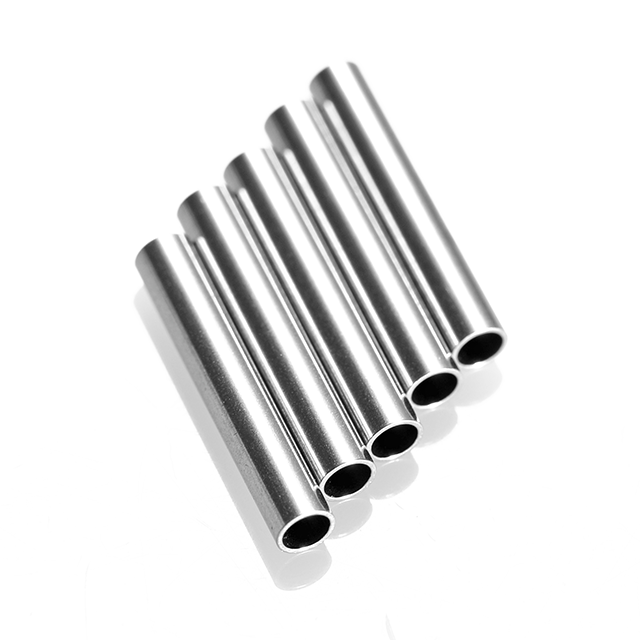
Manufacturing seamless pipes is a precise and controlled process that involves several key steps. Here's a look at each stage, from raw material selection to final testing.
The quality of the raw material is crucial in ensuring the durability of the final product. It all begins with selecting high-quality steel billets that meet strict standards for chemical composition and mechanical properties.
Consistency is Key: The billets must have uniform composition to guarantee the pipe's strength and resistance to pressure. Any imperfections in the raw material can result in a pipe that’s prone to failure under high stress.
Material Types: Common materials used include carbon steel, stainless steel, and alloys that are tailored to specific applications, such as high-temperature environments or corrosive conditions.
Once the billets are selected, they’re heated to a high temperature in a controlled furnace.
Purpose of Heating: Heating makes the material malleable, allowing it to be easily pierced and shaped into the hollow tube that will form the basis of the seamless pipe.
Temperature Control: The furnace is set to precise temperatures to ensure the steel maintains its strength while becoming pliable enough for the next steps.
Next, a piercing mandrel is used to create a hollow shell out of the heated billet.
Creating the Hollow Shell: The mandrel is inserted into the heated billet, and it is then pierced to form the tube. This initial step is critical, as it sets the foundation for the seamless pipe’s structure.
Precision: The accuracy of the piercing process ensures the tube will have the correct internal dimensions, essential for the subsequent elongation and shaping.
The hollow shell is then passed through a series of rolling mills to elongate the pipe and reduce the wall thickness.
Mandrel Mill: At Huashang Steel, advanced mandrel mills are employed to stretch the pipe to the required length while ensuring dimensional accuracy.
Quality Control: The elongation process not only changes the pipe’s size but also refines the internal and external surface to meet exact specifications.
Once the pipe is elongated, it goes through sizing mills to achieve the desired diameter and wall thickness.
Precise Control: This step ensures that the pipe meets the exact measurements needed for the specific application.
Final Shape: After the sizing process, the pipe is almost ready, but it still requires some finishing touches to ensure it meets all specifications.
Heat treatment is an essential process that enhances the pipe’s strength, flexibility, and resistance to corrosion.
Annealing: One common technique is annealing, where the pipe is reheated to a specific temperature and then slowly cooled to relieve internal stresses and improve mechanical properties.
Tailored Properties: Different pipes require different heat treatments based on their intended use. For instance, pipes used in high-pressure environments undergo a more intensive heat treatment process to improve their stress resistance.
After the pipe has been treated, it undergoes a final straightening process to remove any distortions or bends from the elongation.
Ensuring Accuracy: Straightening machines apply controlled pressure to straighten the pipe, ensuring it meets the required geometric properties.
Cut to Length: Finally, the pipe is cut to the desired length, and it is ready for packaging and shipping.
Throughout this process, every step plays a vital role in ensuring the final product is reliable and meets the demanding standards of industries such as oil and gas, power generation, and construction.
Seamless pipes are produced using several advanced techniques. Each method is tailored to meet the specific needs of various applications, ensuring high strength, precision, and durability. Let’s break down the key manufacturing processes that are commonly used in seamless pipe production.
The hot rolling process is one of the most widely used techniques for producing larger seamless pipes.
How it Works: In this process, a heated billet is passed through a series of rolls, reducing its thickness and shaping it into a hollow pipe. The high temperature of the billet ensures it is malleable enough to be formed without breaking.
Ideal Applications: Hot rolling is ideal for producing pipes with larger diameters and thicker walls, often used in industrial systems where the pipe must handle high pressure and temperature, such as in the oil and gas industry.
Cold drawing is another key technique, especially for smaller diameter pipes or when high precision is required.
Process Details: After the pipe is hot rolled, it can be further refined through cold drawing. In this process, the pipe is pulled through a die at room temperature, which reduces its diameter and improves its surface finish. This ensures the pipe achieves tight dimensional tolerances.
Benefits:
Increased dimensional accuracy
Smoother surface finish
Suitable for applications where high precision is required, such as hydraulic systems or automotive manufacturing.
In addition to hot rolling and cold drawing, extrusion and rotary piercing are used for producing pipes with specific material requirements or sizes.
Extrusion Process: In extrusion, heated billets are forced through a mold to create the desired shape of the seamless pipe. This method is often used for pipes with more complex shapes or smaller diameters.
Rotary Piercing: Rotary piercing is used to create the initial hole in the billet, forming the hollow shell. This technique is crucial in ensuring the seamless pipe has a consistent internal diameter.
These techniques are typically used when producing seamless pipes that require unique material properties or when working with specialized alloys. They are common in industries like aerospace, where precision and strength are critical.
Each of these processes plays a crucial role in producing seamless pipes that can withstand the most demanding conditions. Whether it’s hot rolling for larger pipes, cold drawing for high-precision applications, or extrusion and rotary piercing for specialized requirements, these methods ensure the pipes are built to last.
Seamless pipes are made from various materials, each chosen based on the specific demands of the application. The selection of material significantly affects the pipe's performance, including its ability to resist corrosion, withstand high temperatures, or bear mechanical stress. Let's take a look at the most common materials used in seamless pipe manufacturing.
Carbon Steel
Carbon steel is the most commonly used material in seamless pipe production. It is known for its strength and cost-effectiveness. It is used primarily in applications that do not involve high temperatures or corrosive environments.
Applications: General industrial use, construction, and pipelines.
Benefits: Strong, economical, and easy to manufacture.
Stainless Steel
Stainless steel is highly resistant to corrosion and high temperatures, making it the preferred material for industries that deal with harsh environments. It is often used in food processing, chemical, and pharmaceutical applications.
Applications: Chemical processing, food and beverage, pharmaceuticals.
Benefits: Corrosion-resistant, high temperature tolerance, and durable.
Alloy Steel
Alloy steel is made by combining carbon steel with other elements like chromium, molybdenum, and vanadium. This makes it stronger and more resistant to wear, fatigue, and high temperatures.
Applications: Oil and gas, power generation, aerospace.
Benefits: High strength, better wear resistance, and high-temperature endurance.
Nickel and Titanium Alloys
Nickel alloys are used in environments where pipes must withstand extreme temperatures and corrosion. Titanium alloys, on the other hand, are lightweight and corrosion-resistant, ideal for high-performance applications.
Applications: Aerospace, chemical processing, marine.
Benefits: High resistance to heat and corrosion, lightweight, and strong.
Each material used in seamless pipe manufacturing offers distinct advantages that make it suitable for specific applications:
Corrosion Resistance: Stainless steel, nickel, and titanium alloys offer superior protection against rust and chemical degradation. These materials are essential in industries like petrochemicals and marine environments.
High Temperature Tolerance: Materials like alloy steel, stainless steel, and titanium alloys can handle extreme temperatures without degrading. These are commonly used in power plants, aerospace, and chemical reactors.
Mechanical Strength: Carbon steel and alloy steel are chosen for their mechanical strength, making them perfect for use in heavy-duty systems like construction or large pipelines.
When selecting a material for seamless pipes, companies like Huashang Steel carefully consider the demands of the application. Whether it's ensuring the strength of a pipeline in an oil field or the corrosion resistance needed for a chemical plant, choosing the right material ensures the pipe's reliability and longevity.
Understanding the benefits of each material helps manufacturers meet specific industry requirements and ensures the seamless pipe performs optimally under demanding conditions.
Seamless pipes play a crucial role in industries like oil & gas, power generation, and chemical processing. Their strength, pressure resistance, and durability make them essential in critical applications.
When choosing the right seamless pipe, it's important to consider material, size, and specific industry needs.
For expert consultation and high-quality seamless pipes, reach out to Huashang Steel for detailed technical support and procurement assistance.


