
- Home
- Products
- About Us
- Quality
- Application
- Services & Support
- Blogs
- Contact
Views: 0 Author: Site Editor Publish Time: 2026-01-19 Origin: Site


In the complex landscape of industrial processing, the cost of piping failure often exceeds the material cost by magnitudes. A single leak in a chemical plant, a pressure burst in a hydraulic line, or contamination in a pharmaceutical batch triggers safety hazards, environmental fines, and catastrophic downtime. This high-stakes context explains why engineers prioritize Stainless Steel Seamless Tube for critical applications. It is not merely a material choice; it represents a calculated risk-mitigation strategy designed to outperform welded alternatives.
Unlike welded piping, which relies on the integrity of a longitudinal seam, seamless tubing offers uniform structural strength derived from a solid billet. This fundamental difference alters the safety margin of the entire system. This guide evaluates the technical advantages, operational efficiencies, and Total Cost of Ownership (TCO) to assist procurement and engineering teams in making data-driven material selections.
Uniform Structural Integrity: How the absence of weld seams eliminates the primary point of mechanical failure in high-pressure systems.
Superior Corrosion Resistance: Why the passive oxide layer in seamless configurations offers higher reliability in aggressive chemical and marine environments.
Flow Dynamics: The impact of smooth internal surfaces on friction loss, energy efficiency, and hygiene.
ROI Reality: Understanding why higher upfront material costs result in lower long-term maintenance and replacement expenses.
The primary argument for choosing seamless tubing lies in its physical homogeneity. The manufacturing process creates a tube that is consistent in composition and strength at every point along its circumference.
Seamless tubes are manufactured via extrusion. A solid steel billet is heated and pierced through the center, then rolled or drawn to size. This physics ensures the microstructure remains consistent throughout the tube body. There are no zones where the grain structure has been altered by the extreme heat of a welding torch.
In contrast, welded tubes inevitably contain a seam. Even with advanced heat treatment and bead hammering, the weld zone represents a metallurgical discontinuity. This seam creates a focal point for mechanical stress and potential intergranular corrosion. For systems operating near their design limits, a high pressure stainless steel seamless tube removes this variable entirely, providing a uniform barrier against internal forces.
Engineers calculate the safe working pressure of piping using hoop stress formulas. Because welded tubes possess a theoretical weak point at the seam, they are typically assigned a lower joint efficiency factor (often 0.85 or less) compared to the 1.0 efficiency factor of seamless materials.
Generally, seamless tubes offer a working pressure rating roughly 20% higher than welded counterparts of the same dimension and grade. This margin is critical for:
Hydraulic Systems: Where pressure spikes can fatigue welded joints.
Steam Boilers: Where high pressure meets thermal cycling.
Fuel Lines: Where containment is non-negotiable.
In safety-critical sectors like Nuclear Power, Aerospace, and Offshore Oil & Gas, the "Safety Factor"—the ratio of structural capacity to actual applied load—must be maximized. Catastrophic failure in these environments risks human life and massive environmental damage. Seamless tubing acts as an insurance policy. It ensures that the piping system is not the weakest link in the operational chain.
Beyond mechanical strength, industrial environments often involve aggressive chemicals and extreme temperatures. The seamless configuration enhances the inherent properties of stainless steel.
Stainless steel relies on a passive chromium-rich oxide layer to resist corrosion. If the surface is scratched, this layer reforms effectively in the presence of oxygen. However, the welding process can deplete chromium in the heat-affected zone, leading to "sensitization." This makes the weld area susceptible to carbide precipitation and subsequent corrosion.
Seamless manufacturing avoids this thermal trauma. The passive layer remains uniform across the entire surface area. This uniformity makes seamless tubing an ideal heat resistant stainless steel seamless tube choice, as it maintains structural stability without suffering from preferential corrosion at high temperatures.
Selecting the correct alloy further enhances this resilience. The following table outlines common grades used in seamless manufacturing:
| Grade | Primary Characteristics | Typical Application |
|---|---|---|
| 304/304L | Standard corrosion resistance; excellent formability. | Atmospheric exposure, general chemical processing. |
| 316/316L | Added Molybdenum for resistance to chlorides and pitting. | Marine environments, offshore rigs, pharmaceutical plants. |
| Duplex / Super Duplex | High strength combined with extreme stress-corrosion cracking resistance. | Sour gas transport, desalination, deep-sea subsea umbilicals. |
Performance consistency is vital when Stainless Steel Seamless Tubes in Industrial applications face thermal shock. From the cryogenic temperatures of LNG transport (-162°C) where welded seams might become brittle, to the intense heat of furnace exchangers, the uniform grain structure of seamless steel expands and contracts evenly. This prevents the warping or cracking often observed at the interface of dissimilar microstructures in welded assemblies.
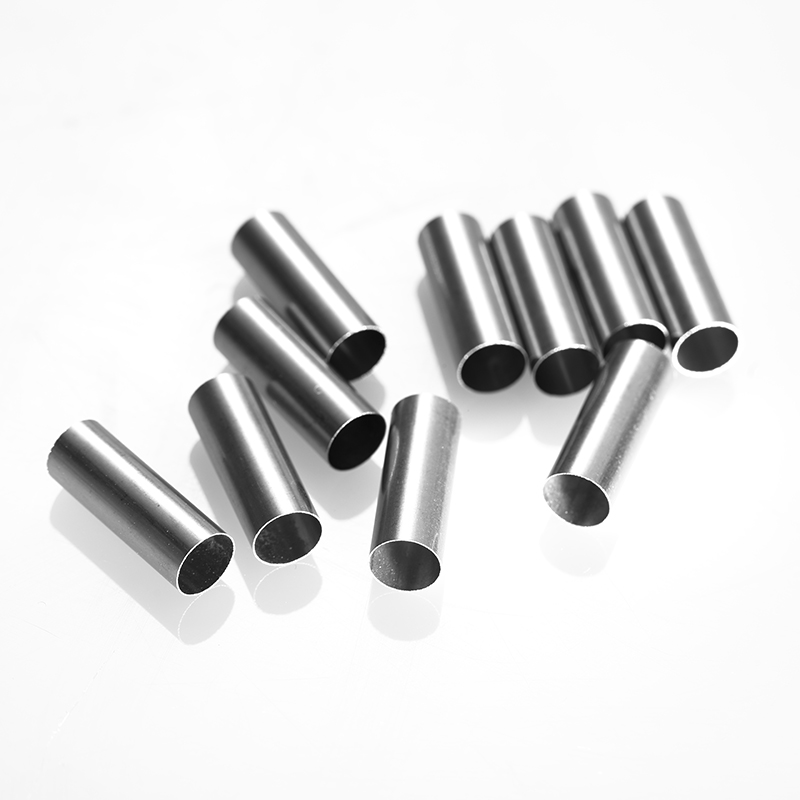
The interior condition of the tube dictates the efficiency of fluid transport and the purity of the product. Seamless manufacturing produces a naturally smoother bore compared to the internal bead found in welded pipes.
A seamless, smooth bore minimizes friction loss. In systems with long piping runs, turbulence caused by weld beads or rough surfaces increases the energy required to pump fluids. By utilizing seamless tubing, engineers reduce the pressure drop across the system. This reduction translates directly to lower pump load requirements and improved energy efficiency over the facility's lifespan.
In industries regulated by strict hygiene standards, surface topography is a contamination risk.
Pharmaceutical & Food: Weld beads can act as "harbor points" where product residue accumulates and bacteria grow. Seamless tubes eliminate these crevices, ensuring Clean-in-Place (CIP) cycles are effective.
Semiconductor/Tech: The transport of ultra-pure gases allows for zero particulate shedding. Any irregularity in the tube wall can generate particles that destroy sensitive microchips.
For these exacting applications, specifying a high purity stainless steel seamless tube or a precision stainless steel seamless tube ensures that the internal surface roughness (Ra) meets the stringent requirements necessary to maintain product integrity.
Procurement teams often hesitate at the premium price of seamless materials. However, analyzing the lifecycle cost reveals a different economic reality.
It is true that seamless tubes carry a higher initial purchase price. The extrusion process is energy-intensive and complex compared to rolling and welding a flat strip. However, focusing solely on the "price per meter" ignores the cost of installation, maintenance, and potential failure. Smart procurement moves the conversation from Purchase Price to Lifecycle Cost (LCC).
Seamless tubes require less rigorous monitoring. Welded seams in critical service mandate frequent Non-Destructive Testing (NDT), such as X-ray or ultrasonic inspection, to monitor for creep or cracking. These inspections require system shutdowns and specialized labor.
Furthermore, seamless tubes demonstrate extended replacement intervals in corrosive environments. The absence of preferential weld corrosion means the tube walls thin uniformly over time, making failure prediction easier and extending the useful life of the asset.
Consider the ROI calculation. The cost of a single unplanned shutdown caused by a split seam includes lost production, emergency repair crews, and wasted raw materials. If a premium seamless material prevents just one such event over ten years, the initial investment pays for itself multiple times over. Reliability is often the most cost-effective feature of any industrial component.
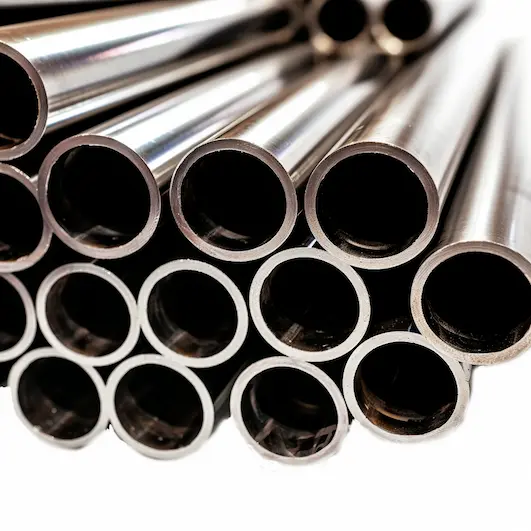
To realize these benefits, sourcing must be rigorous. Not all seamless tubes perform equally; quality depends heavily on the manufacturing pedigree.
Ensuring you receive an ISO stainless steel seamless tube is the first step in quality assurance. ISO certification guarantees that the manufacturer adheres to global standards for dimensional tolerances and material traceability. Key ASTM standards to specify include:
ASTM A312: Standard Specification for Seamless, Welded, and Heavily Cold Worked Austenitic Stainless Steel Pipes.
ASTM A213: Standard for Seamless Ferritic and Austenitic Alloy-Steel Boiler, Superheater, and Heat-Exchanger Tubes.
ASTM A269: Standard for Seamless and Welded Austenitic Stainless Steel Tubing for General Service.
When vetting a Stainless Steel Seamless Tube manufacturer, look beyond the catalog. A capable partner should offer transparency regarding their testing protocols. Essential capabilities include:
Hydrostatic Testing: Verifying pressure containment.
Eddy Current Testing: Detecting surface and sub-surface defects.
Positive Material Identification (PMI): Confirming the chemical composition matches the grade specified.
Sourcing High-Quality Stainless Steel Seamless Tube requires evidence of these quality control measures.
Use this simple matrix to guide the final sourcing decision:
| Application Variable | Recommended Material | Reasoning |
|---|---|---|
| Low Pressure / Water Transport | Welded | Cost-effective; stresses are low. |
| Aesthetic / Architectural | Welded | Visual appearance is prioritized over hoop stress. |
| High Pressure (>20% safety margin) | Seamless | Eliminates seam failure risk. |
| Lethal / Toxic Service | Seamless | Zero-leak tolerance required. |
| Extreme Temperatures | Seamless | Uniform thermal expansion/contraction. |
| Inaccessible Locations | Seamless | Maximize time between replacements. |
Seamless stainless steel tubes remain the industry standard for unforgiving environments where failure is not an option. From the ocean floor to the core of a nuclear reactor, the uniformity of a seamless extrusion offers a margin of safety that welded products cannot match. While the initial investment is higher, the operational continuity, reduced maintenance burden, and extended service life validate the expenditure.
The choice between seamless and welded is ultimately a decision between upfront savings and long-term security. Engineers and procurement managers are encouraged to audit their current piping specifications against the pressure, corrosion, and safety variables discussed here. By selecting the right material for the right application, industrial operations secure their infrastructure against costly disruptions.
A: Seamless tubes typically offer a working pressure rating approximately 20% higher than welded tubes of the same size and grade. This is because seamless tubes have a joint efficiency factor of 1.0, whereas welded tubes are derated (often to 0.85) to account for the potential structural weakness of the weld seam. This makes seamless tubes the superior choice for high-pressure hydraulic and steam applications.
A: Seamless tubes are preferred because they lack the internal weld bead found in welded pipes. This bead can trap bacteria, impede flow, or shed particulate matter. A seamless tube offers a smooth, uniform internal surface that is easier to clean, sterilize, and polish. This is critical for preventing contamination in pharmaceutical manufacturing, food processing, and semiconductor gas lines.
A: Yes, seamless tubes generally exhibit excellent formability. Because they are often annealed during manufacturing and possess a uniform grain structure without a hardened weld zone, they can be bent, flared, and coiled with a lower risk of cracking or splitting compared to welded tubes. This makes them ideal for complex instrumentation lines and heat exchanger coils.
A: The most frequently cited standards are ASTM A312 (for general seamless and welded pipes), ASTM A213 (specifically for seamless boiler, superheater, and heat-exchanger tubes), and ASTM A269 (for general service seamless tubing). Specifying these standards ensures the tubing meets strict chemical and mechanical requirements necessary for industrial use.
A: Generally, no. For low-pressure water transport, decorative railing, or standard architectural applications, the high capabilities of seamless tubing are excessive. In these low-stress environments, welded stainless steel tubing provides adequate strength and corrosion resistance at a much lower price point. Seamless tubing is best reserved for high-pressure, high-temperature, or safety-critical applications where the extra cost yields necessary risk mitigation.


