
- Home
- Products
- About Us
- Quality
- Application
- Services & Support
- Blogs
- Contact
Views: 0 Author: Site Editor Publish Time: 2026-02-04 Origin: Site


Choosing between seamless pipes and Stainless Steel Welded Pipes is not always simple. Many buyers assume one is better.In this article, you will learn the real differences, when to use each type, and how to make the right choice.
When buyers compare seamless pipes and Stainless Steel Welded Pipes, pressure handling usually comes up first. Seamless pipes are formed as a single, continuous structure, so stress spreads evenly when internal pressure rises. This makes them a common choice for systems operating under extreme pressure or temperature, where even small weaknesses could affect safety or performance.
At the same time, Stainless Steel Welded Pipes are designed to handle most real-world industrial pressures without issue. Modern welding processes have reduced seam-related risks significantly, and consistent quality control means the weld is no longer the weak point many people imagine. In everyday applications, it is more important that the pipe operates within its rated pressure range than whether it has a seam or not. Manufacturers such as HUASHANG STEEL focus on stable weld formation and inspection to ensure predictable mechanical behavior.
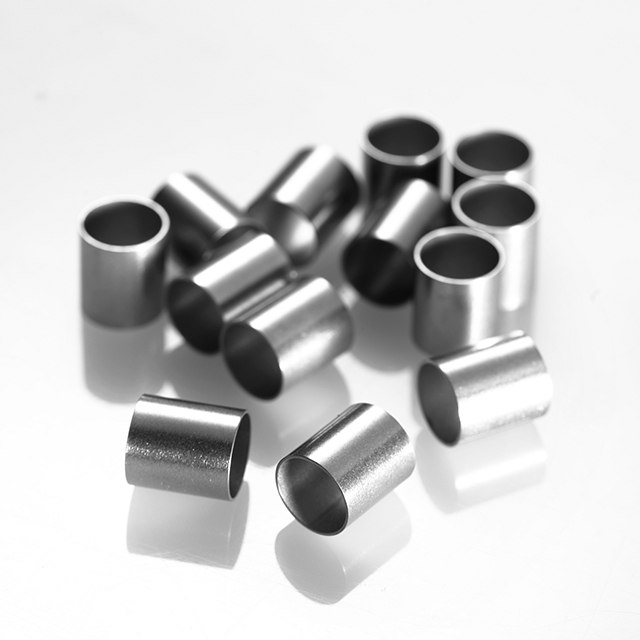
Key pressure-related considerations buyers usually evaluate:
● Operating pressure and pressure fluctuations during use
● Wall thickness and diameter consistency along the pipe length
● Whether the system is continuous duty or intermittent
Comparison item | Seamless pipe | Stainless Steel Welded Pipes |
Pressure behavior | Very stable under extreme pressure | Stable within designed pressure limits |
Stress distribution | Uniform throughout | Concentrated but controlled at weld |
Typical selection logic | Safety-first, critical systems | Practical, cost-aware applications |
From a decision standpoint, seamless pipes make sense when pressure margins are tight. Welded pipes make sense when pressure is moderate and cost efficiency matters.
Both pipe types rely on stainless steel’s chromium content to resist corrosion, so their base material performance starts at the same level. The discussion usually shifts to the weld seam. During welding, localized heat can slightly change the metal structure near the seam, which may increase corrosion sensitivity if not properly treated. That risk is well understood and widely managed in modern production.
In real service conditions, corrosion is influenced more by environment than by pipe type. Media composition, temperature, cleaning cycles, and external exposure often play a bigger role than the presence of a weld. For Stainless Steel Welded Pipes, post-weld treatments such as pickling and passivation help restore corrosion resistance around the seam, keeping performance consistent over time.
Common factors affecting service life include:
● Type of fluid or gas flowing through the pipe
● External environment, such as humidity or chemical exposure
● Surface finish and maintenance frequency
Corrosion factor | Impact on seamless pipes | Impact on welded pipes |
Chemical media | Depends on grade selection | Depends on grade and seam treatment |
Heat-affected areas | Not applicable | Managed through post-weld processing |
Long-term durability | High in controlled environments | Comparable when properly treated |
From a buyer’s point of view, corrosion control is less about choosing seamless or welded, and more about choosing the right material grade and processing level. In many industrial and construction projects, Stainless Steel Welded Pipes offer a reliable service life when matched correctly to the environment.
Size selection often narrows the choice quickly. Stainless Steel Welded Pipes are made from steel coils or plates, so diameter and length can be adjusted more freely during production. That flexibility helps designers handle large pipelines, long straight runs, or structural layouts without excessive joints or redesign.
Seamless pipes are more limited because they start from solid billets. Diameter and length depend on billet size and forming capability, which usually restricts them to smaller ranges. When systems require oversized pipes, designers often turn to welded options to control cost and simplify installation. Manufacturers such as HUASHANG STEEL commonly support these needs by supplying welded pipes in wider size ranges.
Key size-related factors buyers consider:
● Required pipe diameter for flow or structural load
● Preferred pipe length to reduce on-site joints
● Impact of pipe size on transport and installation
Size aspect | Seamless pipe | Stainless Steel Welded Pipes |
Diameter range | Limited | Wide, including large diameters |
Length options | Standard | Long or customized |
Design flexibility | Lower | Higher |
Surface quality affects both function and appearance. Seamless pipes are formed through extrusion or drawing, so surface smoothness and wall thickness can vary slightly. These variations usually do not affect performance, but they may matter in visible installations or flow-sensitive systems.
Stainless Steel Welded Pipes often show more consistent external finish because they start from rolled material. After welding and processing, the pipe keeps uniform dimensions and appearance. This consistency makes welded pipes practical for general industrial use, construction, and applications where alignment and visual quality matter.
Main dimensional aspects engineers check:
● Ovality along the pipe length
● Wall thickness tolerance
● Internal surface smoothness
Surface factor | Seamless pipe | Stainless Steel Welded Pipes |
External finish | Less uniform | Smoother and consistent |
Ovality control | Process-dependent | More stable |
Wall thickness | Slight variation | More uniform |
Cost usually reflects how efficiently a pipe can be produced. Stainless Steel Welded Pipes are formed from coils or plates, so material use stays high and scrap stays low. That efficiency helps keep pricing stable, especially for large-volume or standard-size projects.
Seamless pipes follow a more complex route. Billet piercing, repeated forming, and tighter process control all add cost. Paying more makes sense when systems operate under extreme pressure or safety rules are strict. For most general piping systems, welded pipes deliver the required performance without unnecessary expense.
How buyers typically look at cost:
● Production efficiency and material utilization
● Testing and inspection scope
● Overall system cost, not only pipe price
Delivery time often shapes project decisions faster than price. Stainless Steel Welded Pipes move through production quickly because size adjustments are easier and output is higher. This helps projects stay on schedule and reduces the risk of late-stage design changes.
Seamless pipes rely heavily on billet supply and mill capacity, which can extend lead times, especially for larger sizes. To stay flexible, buyers often choose suppliers who can offer alternatives. Companies like HUASHANG STEEL support this by aligning pipe type, availability, and delivery planning.
What buyers usually confirm before ordering:
● Required delivery date and buffer time
● Size availability for the selected pipe type
● Supplier coordination for production and inspection
In many real projects, Stainless Steel Welded Pipes are chosen because they fit practical needs better than seamless options. They offer flexible sizing, faster delivery, and controlled costs, which makes them suitable for large-scale or schedule-driven work. For contractors and engineers, this often translates into smoother installation and fewer design compromises.
They are commonly used in:
● Structural and construction frameworks, where load is predictable and pressure is moderate
● Water distribution and general industrial piping, where flow stability matters more than extreme pressure
● Projects focused on cost efficiency and fast delivery, especially when large diameters or long lengths are required
Manufacturers such as HUASHANG STEEL support these applications by supplying welded pipes in broad size ranges, helping buyers match pipe specifications to real operating conditions rather than overdesigning systems.
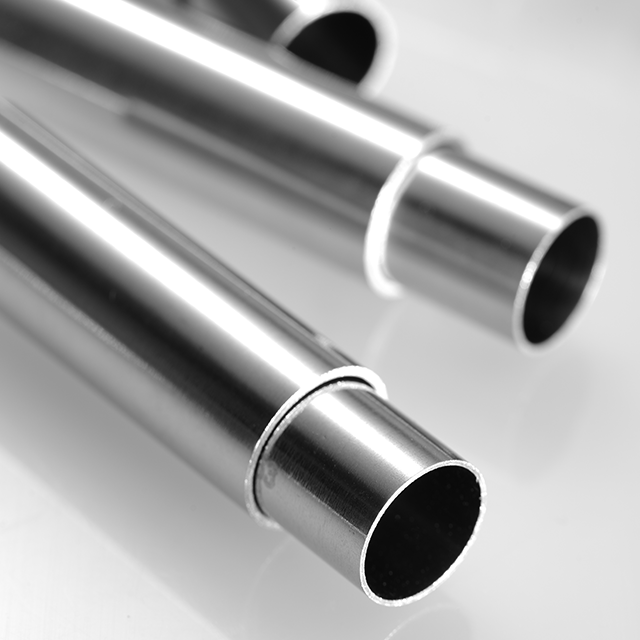
Seamless pipes play a clear role in more demanding environments. Their uniform structure, without a weld seam, provides higher confidence under extreme operating conditions. When pressure, temperature, or safety margins approach system limits, seamless pipes are often specified to reduce risk.
Typical seamless-focused applications include:
● High-pressure and high-temperature systems, where stress concentration must be minimized
● Oil, gas, and chemical processing, where operating conditions are harsh and tightly regulated
● Hydraulic and critical service lines, where failure tolerance is extremely low
In these cases, higher material and production costs are often accepted as part of overall risk control, rather than seen as a disadvantage.
One of the most common assumptions is that seamless pipes are always the better choice. In reality, performance depends on how the pipe is used, not just how it is made. Modern Stainless Steel Welded Pipes are produced under strict quality control, and when used within their design limits, they perform reliably across many industries.
Buyers often overlook a few key points:
● Welded pipes are not inherently weak when weld quality and inspection are controlled
● Many systems never operate near pressure levels that justify seamless pipes
● Correct pipe selection reduces cost and complexity more effectively than defaulting to one type
Focusing on application requirements, rather than assumptions, helps buyers select the right pipe type and avoid unnecessary cost or overengineering.
The starting point is always the real operating condition. Pipes rarely fail because of theory. They fail because the working environment was misunderstood. Stainless Steel Welded Pipes perform reliably when pressure and temperature stay inside their design limits. Seamless pipes become relevant only when conditions approach the upper edge of safety margins.
Engineers usually review how the system behaves day to day. They look at steady operation, startup cycles, and short pressure spikes. Only after that do they decide whether welded or seamless construction is necessary. Choosing pipe type too early often leads to overdesign.
They normally evaluate three connected factors together:
● Pressure and temperature, including normal operation and peak loads. These define stress levels and safety margins.
● Operating environment, such as corrosion exposure, cleaning methods, and media composition. These often affect service life more than pipe type.
● Pipe dimensions, including diameter, wall thickness, and required length. Size availability directly impacts layout efficiency and installation complexity.
When these factors are reviewed as a system, pipe selection stays practical and aligned with actual service demands.
Standards often decide the final choice, even when performance looks similar. Stainless Steel Welded Pipes include weld seams, so inspection becomes part of compliance. Ultrasonic or radiographic testing improves confidence in seam integrity, but it also adds cost, time, and documentation work.
Seamless pipes avoid seam inspection, yet they are not inspection-free. Material certification, dimensional checks, and mechanical testing still apply. From a buyer’s perspective, the difference lies in where inspection effort is concentrated, not whether inspection exists.
Most buyers review compliance from three angles:
● The inspection scope required by the project specification
● Applicable industry or regional standards
● Documentation needs, such as mill test reports and traceability records
Compliance focus | Stainless Steel Welded Pipes | Seamless stainless steel pipes |
Seam inspection | Required | Not applicable |
Testing emphasis | Weld integrity and dimensions | Material and dimensions |
Cost impact | Inspection-related | Built into base price |
Clarifying these requirements early helps avoid approval delays, re-testing, or last-minute changes during delivery.
A common mistake is assuming seamless pipes are always safer. In reality, many systems never operate close to the limits that justify seamless construction. Stainless Steel Welded Pipes often meet technical requirements while offering better availability and cost control.
Smarter decisions usually come from balancing three elements:
● Actual operating limits instead of theoretical extremes
● Delivery timelines and project schedules
● Total system cost, not only pipe price
This is where supplier experience matters. Manufacturers like HUASHANG STEEL support buyers by reviewing specifications, confirming standards, and suggesting suitable pipe options early in the process. That input helps teams stay compliant, control cost, and avoid unnecessary complexity while still meeting performance expectations.
A common mistake is assuming seamless pipes are always safer. In reality, many systems never reach conditions where seamless pipes add real value. Stainless Steel Welded Pipes often meet technical requirements while improving availability and controlling cost.
Buyers usually make better decisions by:
● Matching pipe type to actual operating limits
● Considering delivery timelines alongside performance needs
● Using supplier input during early design stages
Experienced manufacturers like HUASHANG STEEL support this process by reviewing specifications and recommending suitable options. That guidance helps keep performance, compliance, and budget in balance without unnecessary complexity.
Choosing between welded and seamless stainless steel pipes depends on real operating needs.Pressure level, environment, size, and budget all shape the right decision.Stainless Steel Welded Pipes offer cost efficiency, size flexibility, and faster delivery.They suit most industrial and construction applications well.
Seamless pipes fit extreme pressure or critical systems. HUASHANG STEEL supports buyers by supplying reliable pipe solutions and practical technical guidance.


